How to Wear Lab Grown Diamonds Daily Without Damage
Last Updated: October 27, 2026
Quick Summary
Lab grown diamonds are durable enough for daily wear because they match mined diamonds at Mohs hardness 10 and will not scratch, dull, or wear away from normal contact. Their real weakness is impact at the girdle and sharp points, so choose a balanced girdle and a protective setting.
- Diamond rates good, not exceptional, on toughness and has perfect cleavage in four directions.
- Chips come from short, sharp impacts like countertops, car doors, gym weights, and falls.
- A bezel setting wraps metal around the girdle and offers high edge protection for active wear.
- Clean weekly with mild dish soap and warm water, and keep chlorine and bleach away.
- Remove your ring for gym sessions, swimming, gardening, heavy cleaning, and sleeping.
Table of Contents
- Are Lab-Grown Diamonds Durable Enough for Everyday Wear?
- Hardness vs. Toughness: Why the Mohs Scale Only Tells Half the Story
- Can Lab-Grown Diamonds Chip or Scratch?
- How Long Do Lab-Grown Diamonds Last?
- Lab-Grown Diamond Care and Cleaning for Daily Wear
- Daily-Wear Guidance by Activity: When to Take Your Ring Off
- Settings, Cuts, and Inspections: The Durability Factors You Control
- Choosing a Daily-Wear Piece from Amoré Lux
- Frequently Asked Questions
Are Lab-Grown Diamonds Durable Enough for Everyday Wear?
Yes. Lab grown diamonds are real diamonds, with the same carbon crystal structure and Mohs hardness of 10 as a mined stone. It can, if you understand what “durable” covers.
Hardness and toughness are different properties. A diamond resists scratches better than any gemstone on earth, but not a hard knock to the edge of a thin setting.
So the answer has two parts:
- The stone itself will not wear down, cloud over, or lose its sparkle with normal daily wear
- The setting, the band, and how you treat the piece determine whether it lasts decades without repair
Hardness vs. Toughness: Why the Mohs Scale Only Tells Half the Story
Hardness measures scratch resistance; toughness measures resistance to breaking. The Mohs scale ranks hardness only, which is why it gets misread.
Diamond sits at the top of the Mohs scale at 10; corundum, the family that includes sapphire and ruby, sits at 9 (Natural Gemstones).
Toughness is a separate scale, and diamond rates as good, not exceptional.
What this means in practice:
- Scratches: Nearly impossible during normal wear. Only another diamond can scratch a diamond.
- Chips and fractures: Possible at the girdle, the thin edge around the widest part of the stone, especially with thin or exposed settings.
- Abrasion: The stone wins against metal, glass, and everyday grit.
The Gemological Institute of America’s gem encyclopedia explains diamond’s crystal structure and cleavage in detail if you want the technical side.
Why a 10 on the Mohs Scale Does Not Mean Indestructible
The Mohs scale is ordinal, not linear: the gap between 9 (corundum) and 10 (diamond) is far larger than the difference between 1 and 9 combined. That is why a diamond shrugs off grit that would dull a sapphire. But hardness says nothing about a sudden load.
Think about the two failure modes separately:
- Abrasive wear happens gradually, as surfaces slide against each other. Diamond wins this fight against everything except another diamond.
- Impact fracture happens in an instant, when force concentrates at a point or edge. Here diamond behaves like a very hard, moderately tough ceramic: it can chip, cleave, or crack.
A ceramic dinner plate illustrates it. Scrub it with steel wool and it will not scratch; drop it edge-first on tile and it shatters. Diamond is far tougher than a plate, but the principle holds: hardness protects the face, toughness protects the edge.
Where the Real Risk Sits on a Finished Stone
On a cut diamond, the vulnerable zones are predictable:
- The girdle. The thin band around the widest part of the stone is the most common site for chips. A very thin girdle (graded “extremely thin” or “very thin”) concentrates stress and chips more easily than a medium or slightly thick one.
- Sharp corners and points. Pear, marquise, princess, and heart shapes have exposed tips that take impact directly if the setting leaves them uncovered.
- The culet. On older cuts with a pointed culet, a hard knock can chip the bottom of the stone.
- Feathers and inclusions near the surface. A feather reaching the surface can start a crack under impact, one reason clarity grade and inclusion position matter for daily wear, not just looks.
What Actually Causes a Chip
Chips rarely come from slow wear. They come from short, sharp events:
- A ring striking a granite countertop edge as you set down a glass
- A car door slammed on a hand
- A dumbbell or kettlebell contacting the setting at the gym
- A hard fall onto tile or concrete
The common thread is a hard, concentrated impact against a rigid surface, delivered to an exposed edge. So the advice is not “avoid all activity” but “protect the girdle and the points.” A bezel or a well-made prong setting with a protective gallery does more for real-world durability than any claim about the stone itself.
The Takeaway for Daily Wear
Lab grown diamonds will not scratch, dull, or wear away from normal daily contact. Its weakness is impact at the edges, shared with every mined diamond. Choose a balanced girdle, a setting that shields the edge, and treat hard knocks as the real enemy.
Can Lab-Grown Diamonds Chip or Scratch?
Lab-grown diamonds can chip, but they almost never scratch. The stone matches a mined diamond in hardness, so chip risk comes from impact, not friction.
Chips cluster around three situations:
- A hard strike against a countertop, car door, or gym weight
- A thin girdle or a prong setting that leaves the edge exposed
- Existing nicks that weaken the stone over time
Scratches are a different story. Dust contains quartz, which ranks 7 on the Mohs scale (Natural Gemstones). It cannot touch a diamond.
One myth worth clearing up: lab-grown diamonds do not fade, yellow, or turn cloudy from wear.
How Long Do Lab-Grown Diamonds Last?
A lab-grown diamond lasts indefinitely. It is not a coating or a treatment that wears off. The crystal is diamond all the way through, so the stone will outlast its setting, its band, and probably its first owner.
The realistic lifespan question is about the jewelry, not the gem.
What actually ages:
- Prongs thin over time from friction and cleaning
- Bands wear at the base from constant contact
- Settings loosen after knocks that go unnoticed
Lab-Grown Diamond Care and Cleaning for Daily Wear
Cleaning a lab-grown diamond is simple, and skipping it is the fastest way to make a durable stone look tired.
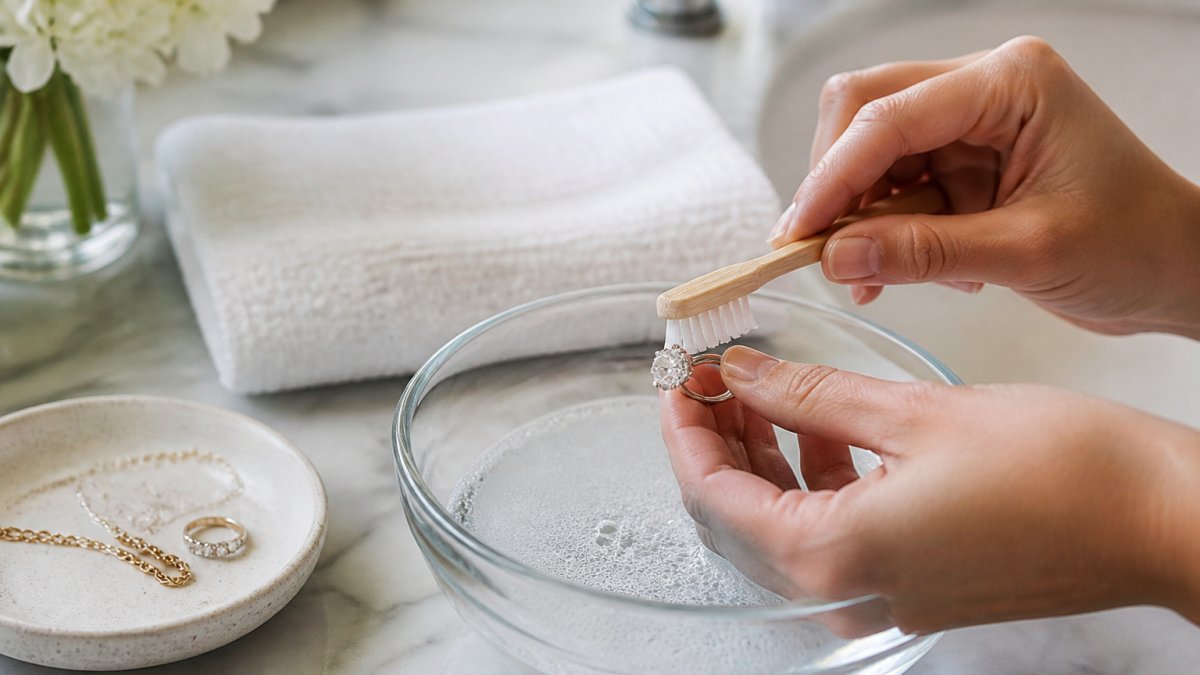
A routine that works:
- Mix a few drops of mild dish soap in warm water
- Soak the piece for 10 to 15 minutes
- Scrub gently with a soft-bristled brush, focusing under the stone
- Rinse under warm water with the drain covered
Keep chlorine from pools and hot tubs, household bleach, and abrasive cleaners away from the piece. Chlorine can pit some metals and weaken solder joints over time.
For a full step-by-step walkthrough, see our guide on how to clean lab grown diamond jewelry.
Daily-Wear Guidance by Activity: When to Take Your Ring Off
Most damage happens in short windows, not over years. For deeper guidance on durable jewelry for active lifestyles, see our full guide. Knowing when to slip the ring off prevents most chips, bent prongs, and lost stones.
Take it off for:
- Gym sessions and lifting: metal bars and dumbbells strike the setting directly
- Swimming: chlorine exposure plus cold water that shrinks fingers
- Gardening and yard work: grit, tools, and impact
- Heavy cleaning: bleach and abrasive products
Keep it on for:
- Desk work, typing, and meetings
- Cooking and light kitchen tasks
- Errands and daily commuting
Settings, Cuts, and Inspections: The Durability Factors You Control
The setting protects the stone and is the biggest lever you control over long-term wear. A bezel wraps metal around the girdle and shields the edge from impact; prong settings show more of the stone but leave the girdle exposed.
| Setting Type | Edge Protection | Stone Visibility | Best For |
|---|---|---|---|
| Bezel | High | Lower | Active daily wear |
| Six-prong | Moderate | High | Classic rings, careful wear |
| Four-prong | Lower | Highest | Occasional wear |
| Channel | High | Moderate | Bands and side stones |
Cut matters too. Stones with a thin girdle or a sharp pear or marquise tip chip more easily; a well-cut stone with a balanced girdle handles knocks better.
How to Check a Setting at Home
You do not need a loupe to catch most problems early.
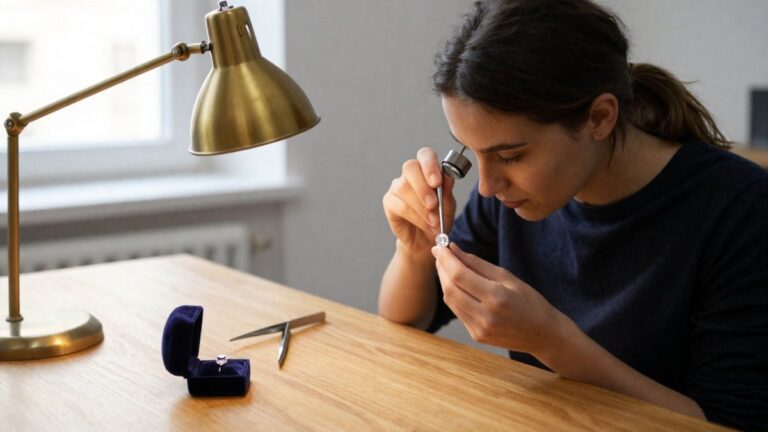
- Look at the prongs from the side. Each prong should curve over the girdle and sit flush against the stone. A prong that stands up, looks bent, or has a visible gap is a snag risk.
- Run a fingernail gently along each prong tip. A sharp edge or a rough spot means the prong has worn thin and needs re-tipping.
- Press the stone gently with a clean finger. Any rocking or clicking means the stone is loose. Stop wearing the ring and see a jeweler.
- Check the gallery and underside. Look for cracks in the metal, bent bars, or debris packed under the stone.
- Inspect the band at the base. The bottom of the shank wears thinnest. If it feels noticeably thinner than the sides, it is time for a check.
When to Repair, Re-Tip, or Reset
Not every setting problem means a new ring. The response depends on what failed:
- Loose stone: A jeweler can usually tighten prongs in the same visit. Do not delay; a loose stone can fall out without warning.
- Worn prong tips: Re-tipping adds metal back to the prong ends, routine maintenance, not a rebuild.
- Thin band: A jeweler can add metal to the shank or replace the bottom section. Catching this early avoids a full remake.
- Cracked or bent setting: Often a reset is safer, especially if the stone has been knocked repeatedly.
Cut Geometry and Shape-Specific Risks
Two stones with the same carat weight can have very different durability profiles:
- Round brilliants have no sharp points and a continuous girdle, making them the most forgiving shape for daily wear.
- Princess cuts have four sharp corners that are exposed unless the setting protects them. Insist on a prong at each corner, or a bezel.
- Pears and marquises have tips that take impact directly. Ask for a V-prong or a bezel at the point.
- Ovals and emeralds have a long girdle that can be thin in places. Check the grading report for girdle thickness.
A Maintenance Calendar That Works
- Weekly: clean the ring at home and glance at the prongs while it dries.
- Monthly: do the five-point home check above.
- Every six months: professional inspection, ultrasonic cleaning if the jeweler recommends it, and a written note of any prong wear.
- Annually: budget for re-tipping or a band check. Most jewelers will do a quick tighten at low or no cost during a cleaning.
- After any hard knock: inspect immediately, even if nothing looks wrong. Chips and loose stones are easiest to fix before they worsen.
Choosing a Daily-Wear Piece from Amoré Lux
At Amoré Lux, Abbey and Maria built the collection around pieces meant to be worn, not stored, designs that keep the meaning behind the jewelry intact. Browse lab-grown diamond jewelry to find a piece for daily wear.
Frequently Asked Questions
Are lab-grown diamonds durable enough for daily wear?
Yes. Lab-grown diamonds have the same crystal structure and Mohs hardness of 10 as natural diamonds, so they resist scratches from everyday contact with keys, desks, and countertops. The real risks are impact chips and loose prongs, not the stone itself.
Can lab-grown diamonds chip or scratch?
A lab-grown diamond can chip if it takes a sharp blow at the wrong angle, especially near the girdle or a pointed cut like a marquise or pear. It will not scratch from normal daily contact because only another diamond can scratch it.
Do lab-grown diamonds get cloudy or fade over time?
The diamond itself does not fade or turn cloudy. What dulls a ring is buildup of oils, lotion, soap, and dust on the pavilion, which blocks light and makes the stone look hazy.
How should you care for a lab-grown diamond you wear every day?
Clean the ring weekly with warm water, mild dish soap, and a soft brush, then dry it with a lint-free cloth. Remove it before swimming, cleaning with bleach or chlorine, exercising, or applying lotion and perfume. Schedule a professional inspection and cleaning every six months so a jeweler can tighten prongs and check the setting. Store the piece separately in a soft pouch to avoid rubbing against harder jewelry.
The real challenge is not finding a durable stone. It is matching the setting and care routine to the way you move through your week. Amoré Lux designs jewelry for exactly that: pieces that celebrate love, light, and individual expression while holding up to daily wear. Explore thoughtfully crafted settings, compare styles, and find a piece that radiates confidence every day. Get started with Amoré Lux and wear your diamond without holding back.