Modern Jewelry Design for Individual Expression
Table of Contents
- Why Modern Jewelry Design Is About You, Not the Trend
- Modern Jewelry Design Styles That Tell a Story
- How to Design Your Own Jewelry: A Step-by-Step Process
- Translating Identity and Values Into Design Choices
- Personalized Jewelry for Women: Meaning in the Details
- Materials, Durability, and Ethical Sourcing
- Budget, Fit, and Working With a Jeweler
- Frequently Asked Questions
Last Updated: October 18, 2026
Why Modern Jewelry Design Is About You, Not the Trend
Modern jewelry design for individual expression starts with a simple shift: the wearer decides what a piece means, not the season’s lookbook. At Amoré Lux, we build every piece around that idea. A ring or pendant should feel like a portrait of the person wearing it, not a logo for a trend that fades in a year.
That reframing changes how you shop. You stop asking “is this in style?” and start asking “does this say what I want to say?”
From Status Symbol to Self-Portrait
Jewelry once announced your family name or your bank balance. Fine jewelry still carries weight, but the meaning has moved inward. People now choose pieces that mark a personal milestone, a value, or a memory. The Gemological Institute of America’s consumer education resources describe how buyers increasingly ask about a stone’s origin and story, not just its size.
A common mistake is buying for the occasion instead of the person. The piece that gets worn for decades is the one that felt like yours on day one.
The Shift Toward Wearable Art
Wearable art is jewelry designed as a small sculpture you put on your body. It leans on form, texture, and proportion rather than a single flashy stone. Independent designers and artisan jewelers have pushed this idea into everyday wear, so a sculptural cuff or an asymmetrical pendant no longer feels reserved for a gallery opening.
The result: modern jewelry that works at a desk, at dinner, and on a weekend. More on that balance below.
Modern Jewelry Design Styles That Tell a Story
The best style guide is a mirror. Modern jewelry design styles fall into a few clear families, and each one says something different about the person wearing it. But style only matters if the piece is comfortable enough to wear, so the table below pairs each family with the fit and comfort questions that decide whether it stays in your rotation.
| Style | What It Signals | Best For | Fit and Comfort Check |
|---|---|---|---|
| Minimalist | Restraint, focus | Everyday wear, layering | Thin chains and bands under 2 mm can dig or twist; check clasp weight and whether the piece stays centered when you move |
| Sculptural | Confidence, artistry | Statement moments | Volume adds grams; a cuff over 40 g or a pendant over 2 inches can pull on the neck or catch on sleeves, try it on with the layers you actually wear |
| Geometric | Precision, edge | Modern wardrobes | Sharp corners and flat planes can press against the skin; confirm the inner edge is rounded and the piece sits flat |
| Organic | Warmth, ease | Casual and occasion wear | Irregular shapes need careful sizing; a wavy band can spin if the fit is loose, so ask for a half-size adjustment |
| Eclectic | Personality, play | Self-expression | Stacked pieces add weight and friction; test the full stack together, not one piece at a time |
Minimalist and Sculptural
Minimalist design strips a piece to its essentials: a clean line, a single metal, a quiet silhouette. It layers well and rarely fights with an outfit. Sculptural jewelry does the opposite. It uses volume and negative space to make the metal itself the statement.
What most guides miss is that these two styles pair beautifully, and that the pairing only works if the weight is balanced.
Eclectic, Geometric, and Organic
Geometric forms bring order: circles, bars, and clean angles. Organic shapes bring movement, with curves that echo shells, leaves, or flowing metal. Eclectic style mixes eras and materials on purpose.
The trick is a shared element. Pick one thread, such as a favorite metal or a recurring color, and let the shapes vary around it. That is how an eclectic stack looks intentional rather than accidental.
Comfort is the hidden variable in all three. Geometric pieces with flat backs sit better against the skin than hollowed shapes that trap moisture.
Photograph your three favorite outfits, then lay your jewelry on top of each photo. If a piece works with all three, it earns a permanent spot in your rotation. Then wear the full stack for a full day before you buy, comfort shows up in hours, not minutes.
How to Design Your Own Jewelry: A Step-by-Step Process
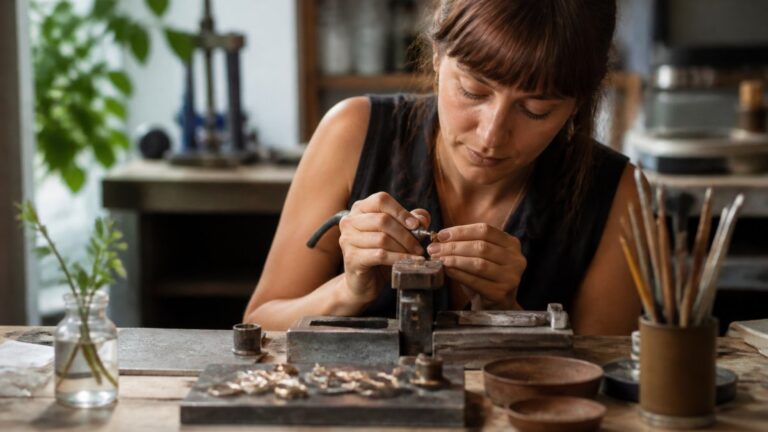
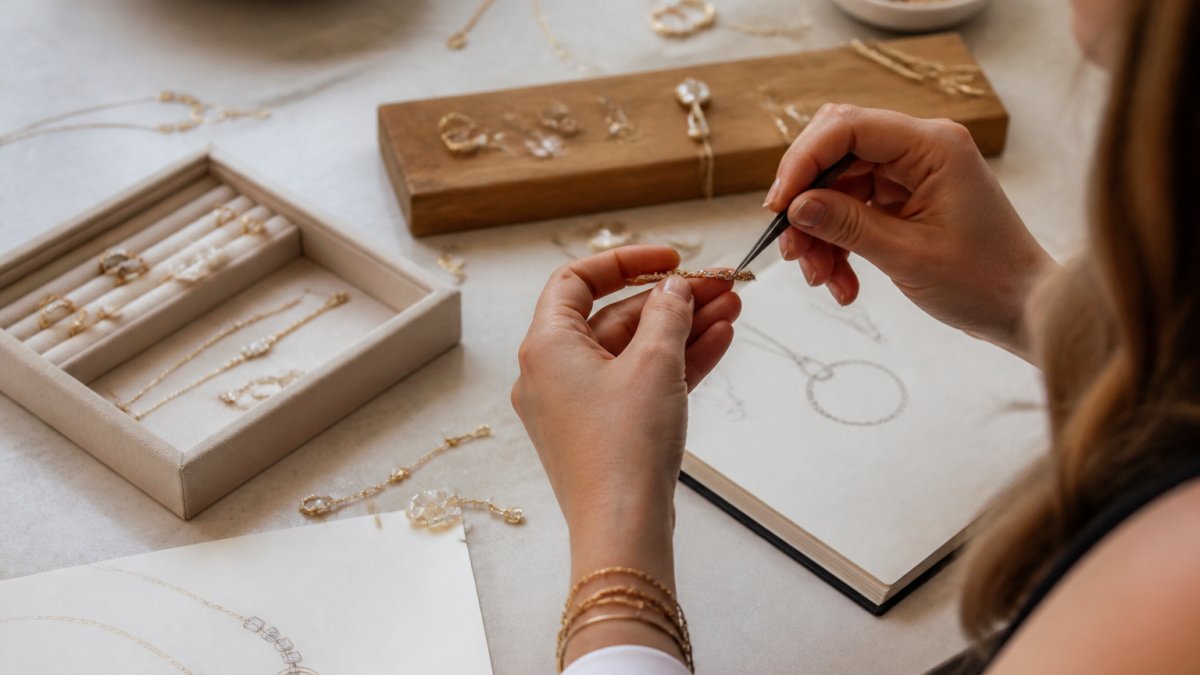
Designing your own jewelry is a process of translation: you turn a memory, a value, or a feeling into metal, stone, and proportion. Most people skip straight to browsing photos. The stronger path is to write before you shop.
Here is the process we walk clients through.
- Name the meaning. Write one sentence about what the piece marks. A birth, a vow, a promotion, a person.
- Pick a symbol. Choose a shape, initial, or birthstone that carries that meaning for you.
- Set your metal. Decide between warm and cool tones, and check what you already wear daily.
- Choose a scale. Measure an existing piece you love, then match its width and drop.
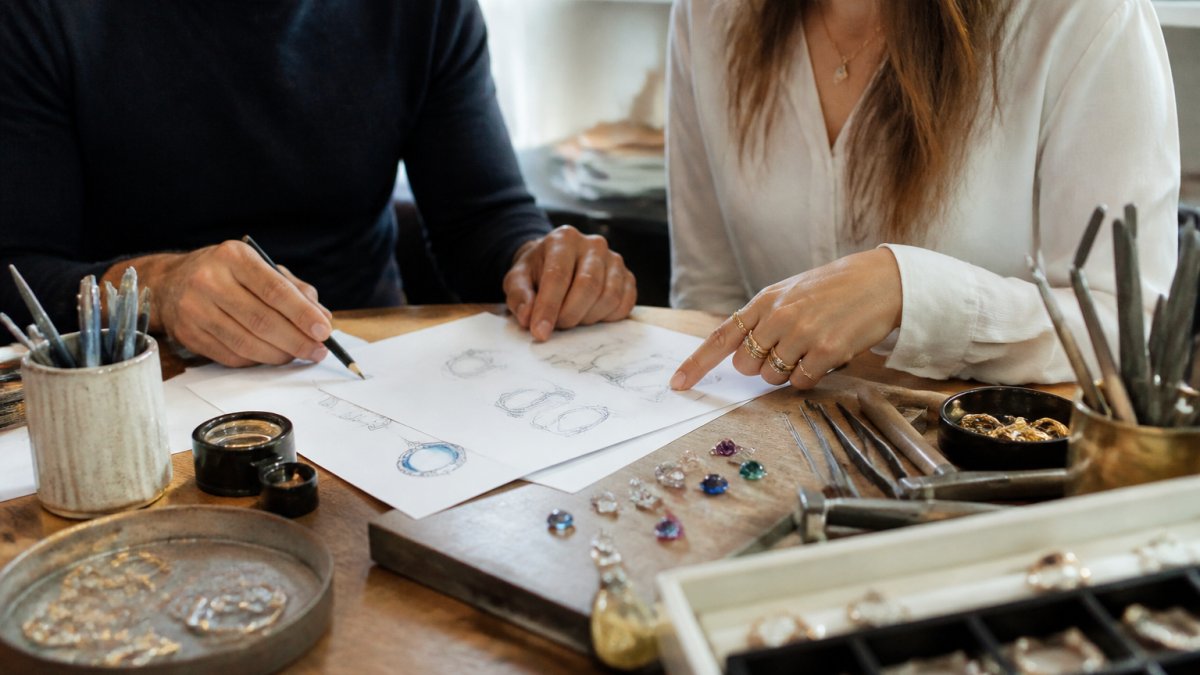
- Sketch three versions. Rough drawings are enough. Variation reveals what you actually want.
- Write a short design brief. One page covering meaning, metal, stone, size, and budget.
- Review it with a jeweler. Ask what is buildable and what needs adjusting.
- Approve a render or wax model. Confirm proportions before production begins.
That brief is the asset. It keeps the project on track and gives your jeweler clear specifications to work from.
If you can explain your piece in one sentence, you can design it. Clarity about meaning is what separates a custom piece you love from one you regret.
Translating Identity and Values Into Design Choices
Your identity does not fit in a single motif, so translate it in layers. A person who cares about sustainability may choose recycled metal and a lab-grown stone.
Life experience works the same way. A favorite city can become a coordinate engraving. A family birthstone can anchor a pendant. The design inspiration comes from your own story, not a catalog.
A common mistake is overloading a piece. Three symbols on one pendant usually blur into noise. Pick the strongest one and let the metalwork carry the rest.
Personalized Jewelry for Women: Meaning in the Details
Personalized jewelry for women works best when the personal detail is small and deliberate. Initials, birthstones, engraved dates, and custom silhouettes all turn a nice piece into a meaningful one. The detail should feel discovered, not announced.
But a personal detail only earns its place if the piece fits your body and your week. Here is what to settle before you order.
Fit, Comfort, and Everyday Wearability
- Ring sizing: Measure at the end of the day when fingers are largest, and confirm the band width, wide bands (6 mm and up) usually need a half size up. A ring should slide on with slight resistance and clear your knuckle without twisting.
- Necklace length: A 16-inch chain sits at the collarbone, 18 inches at the base of the neck, and 20 inches below it. An initial pendant on a 16-inch chain can collide with a collared shirt; 18 inches is the safer everyday default.
- Earring weight: Studs and small hoops under 3 g stay comfortable through a workday. Heavier drop earrings need a locking back or a larger post to keep from pulling the lobe.
- Skin sensitivity: Nickel is the most common metal allergen. If you react to costume jewelry, ask for nickel-free white gold, platinum, or sterling silver, and confirm the alloy rather than the color name.
- Closures: A lobster clasp is secure but harder to fasten alone; a spring ring is easier but can open under load. For bracelets you put on daily, a box clasp with a safety catch is the most reliable.
Personal Details That Hold Up Over Time
Engraving depth matters. A shallow laser engraving on a thin band can wear smooth in a few years, while hand engraving cuts deeper and lasts longer. Birthstone settings should be flush or bezel-set if you wear the piece daily, prong settings catch on clothing and lose stones.
Consider how the detail will age. An initial necklace in 14k gold will outlast a plated version, which can flake at the edges where the chain rubs.
Working the Piece Into Your Wardrobe
A personalized piece should not live in a box. Match scale to your frame and your layers: a delicate initial necklace reads well under a button-down, while a birthstone ring can stack with a plain band for everyday wear and stand alone for occasion wear.
At Amoré Lux, we design personalized pieces with that daily transition in mind. The goal is jewelry that feels like yours on a Tuesday, not just on a birthday.
Engraving and resizing are harder to undo than most buyers expect. Confirm the spelling, the date format, the ring size, and the alloy before you approve the final order, because rework often means a new piece. Ask whether the piece can be resized later and how many sizes the design allows.
Materials, Durability, and Ethical Sourcing
Durability starts with honest material choices. Different metals behave differently over years of daily wear:
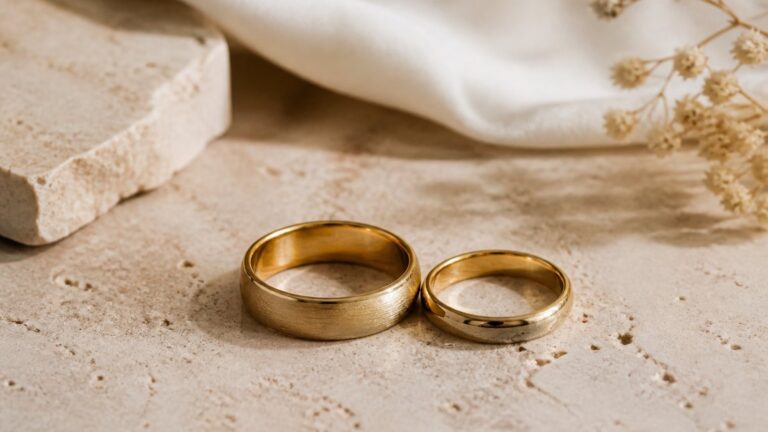
- 14k and 18k gold: strong, low-maintenance, and easy to repair
- Platinum: dense and durable, with a natural patina over time
- Sterling silver: affordable and soft, so it needs more care
- Lab-grown diamonds: chemically identical to mined diamonds, with a documented origin
Ethical sourcing means asking where the metal and stones came from and getting a clear answer. The Federal Trade Commission’s jewelry guides set the disclosure standards sellers must follow on claims about origin and quality, so read the fine print. For lab-grown stones, the Federal Trade Commission’s guidance on lab-grown diamond marketing explains what sellers must disclose.
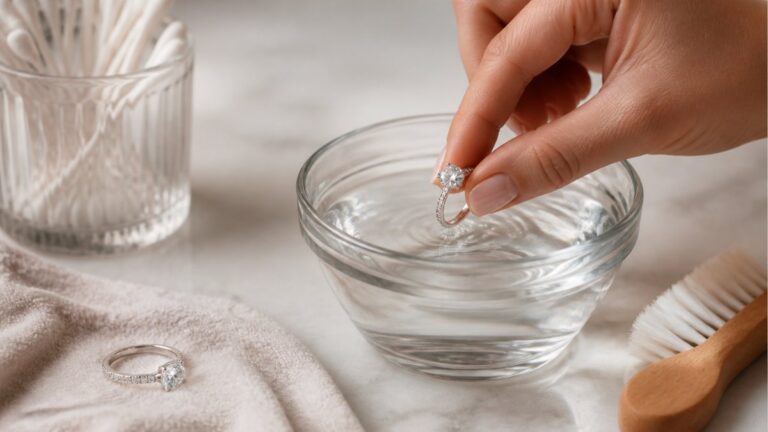
Care is simple. Store pieces separately, remove them for harsh cleaners, and have prongs checked once a year.
Budget, Fit, and Working With a Jeweler
Budget and fit decide whether a beautiful design becomes a piece you actually wear.
Fit matters as much as design. A ring should slide on with slight resistance and clear your knuckle without twisting.
When you work with a jeweler, bring your brief, your measurements, and your questions. A good partner will tell you what will not work.
Ask for a render or wax model before production. Seeing the piece in three dimensions catches proportion problems that flat sketches hide.
Choosing jewelry that reflects who you are takes more thought than scrolling a trend page, and that is the point.
Frequently Asked Questions
How can jewelry express personal style?
Jewelry expresses personal style through the choices you make: the metals you prefer, the shapes that draw your eye, and the way a piece fits your daily life. A minimalist design in a favorite metal can signal quiet confidence, while sculptural or eclectic pieces show a bolder point of view. The strongest expression comes when you choose pieces that reflect your values and story, not just what is trending. Layering, proportion, and how you combine pieces with your wardrobe all shape the message.
How do I design my own jewelry?
Start with a design brief: write down the occasion, the feeling you want the piece to carry, your preferred metals, and a budget range. Gather inspiration from modern jewelry design styles, then sketch or collect reference images. Decide on the centerpiece, such as a stone or initials, and the form, like a pendant or signet ring. Share your brief with a jeweler and ask about materials, durability, and timelines. Review a rendering or wax model before production begins.
What makes a piece of jewelry feel personal and meaningful?
Meaning usually comes from three things: a story, a detail, and a connection. A story could be a milestone or a value you hold. A detail might be initials, a birthstone, or an engraved date. A connection is how the piece fits your everyday wear, so it feels like yours rather than something stored away. Personalized jewelry for women often combines these elements, but the principle applies to anyone: the piece should reflect your life, not a generic template.
How do I choose jewelry for a significant milestone?
Choose a piece that marks the moment without locking you into one occasion. Consider metals and settings that hold up to daily wear, and ask about care and repair policies before buying. A custom design lets you build in a meaningful detail, such as a birthstone or an engraved message. Set a budget first, then compare options within it. Ask the jeweler for certifications and guarantees so the piece arrives as described and stays wearable for years.