How to Clean Lab Grown Diamond Jewelry (2026 Guide)
Table of Contents
- How to Clean Lab Grown Diamond Jewelry at Home
- How to Clean a Lab-Grown Diamond Ring
- How to Clean Lab-Grown Diamond Earrings
- Cleaning Diamond Jewelry with Dish Soap
- How Often to Clean Diamond Jewelry
- Ultrasonic and Steam Cleaners: When to Use Them
- Cleaning Necklaces, Bracelets, and Metals: Gold and Platinum
- When to Seek Professional Inspection or Cleaning
- Frequently Asked Questions
Last Updated: October 19, 2026
How to Clean Lab Grown Diamond Jewelry at Home
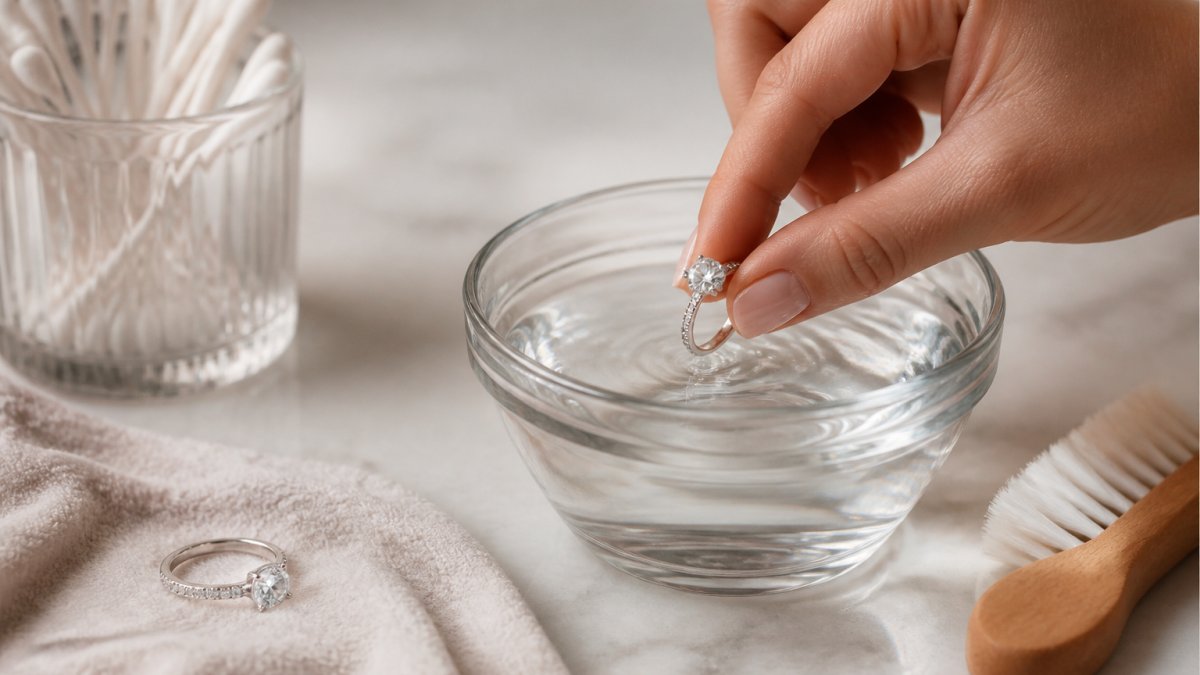
Learning how to clean lab grown diamond jewelry at home takes about ten minutes and three things you already own. The method is simple: soak, brush, rinse, dry. At Amoré Lux, we tell every customer the same thing. A lab-grown diamond is a real diamond, so it collects the same skin oils, lotion, and soap film as a mined stone. The difference is in the setting, not the stone.
Here is the routine that works.
- Fill a small bowl with warm water and a drop of mild dish soap.
- Drop the piece in and let it soak for 20 to 30 minutes.
- Brush gently with a soft toothbrush.
- Rinse under clean water.
- Dry with a soft, lint-free cloth.
A common mistake is cleaning over an open sink. Put a stopper in first, or work over a towel. Loose stones and dropped earrings disappear down drains more often than people admit.
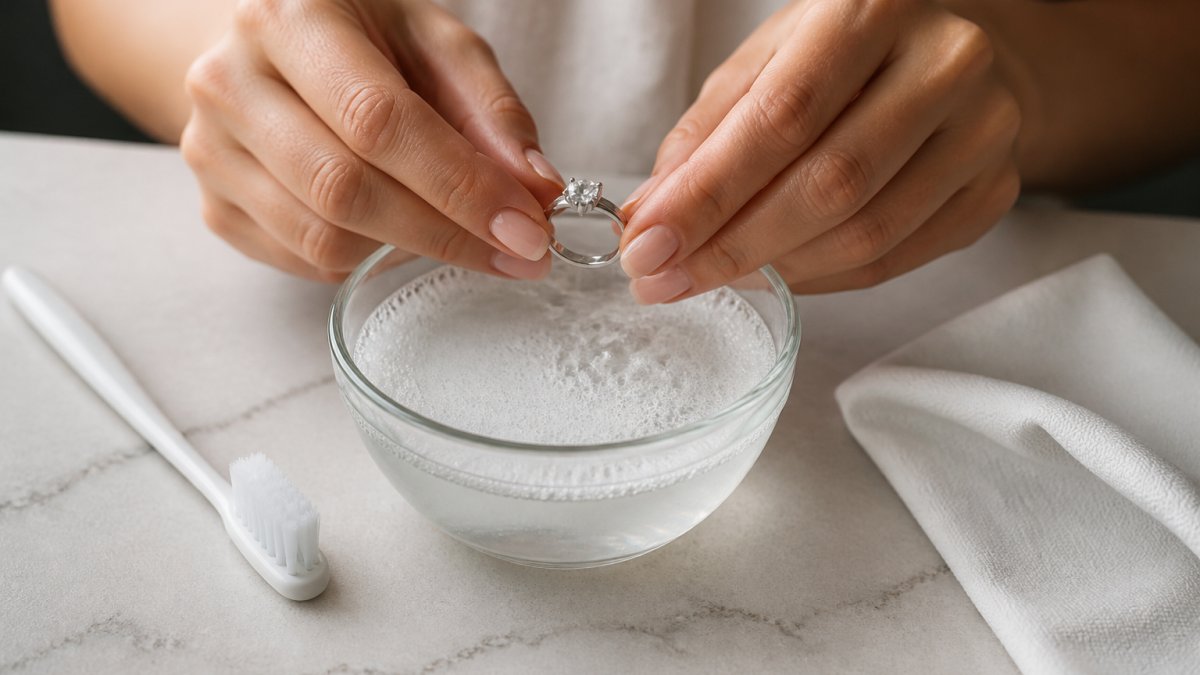
Clean your jewelry before bed, not before you leave the house. The piece dries overnight, and you avoid the scramble when you’re already running late.
How to Clean a Lab-Grown Diamond Ring
Cleaning a lab-grown diamond ring means soaking it for 20 to 40 minutes, brushing the basket and gallery underneath the stone, then rinsing and drying. The underside matters most. That’s where soap residue and hand lotion build up, and it’s the part most people never touch.
Skip the temptation to scrub hard. Gentle pressure with a soft brush lifts film. Scrubbing with force does nothing extra and can loosen a prong over time.
Cleaning by Setting: Prongs, Pavé, and Halos
Prong settings are the easiest to clean. You can reach the stone’s underside with a brush and see what you’re doing.
Pavé and halo settings are a different job. Those tiny stones sit close together, and grit collects in the gaps. Use a soft brush and light strokes, and don’t pick at the spaces with a pin or needle.
- Prong set: brush the basket and each prong base
- Pavé: short strokes across the surface, then rinse well
- Halo: clean around the outer ring, where film hides
If a stone feels loose or you hear a rattle, stop cleaning and have a jeweler look at it.
How to Clean Lab-Grown Diamond Earrings
Cleaning lab-grown diamond earrings follows the same soak-and-brush method, with one addition: clean the posts and backs. Those parts touch skin all day and collect the most oil.
Soak the pair for 20 minutes. Brush the front, the posts, and the backing. Rinse over a bowl, not the sink, because earrings are small and backs are smaller.
For studs, a cotton swab works well around the setting. For drops and hoops, a soft brush reaches the joints where the piece moves.
Cleaning Diamond Jewelry with Dish Soap
Dish soap is the right choice because it cuts grease without harming the stone. The mechanism is straightforward: mild dish detergents contain surfactants, molecules with a water-loving head and an oil-loving tail, that lift skin oils, lotion residue, and soap film off the diamond and suspend them in water so they rinse away. A lab-grown diamond is chemically identical to a mined one, so the same surfactant chemistry applies.
Use a mild, unscented, dye-free dish detergent and a few drops in warm water. That’s the whole recipe. What you want is a soap solution that feels slightly slippery, not thick. Too much soap leaves its own film behind, and dye or fragrance can leave residue in pavé gaps and behind the stone.
Getting the Solution Right
- Water temperature: warm, not hot, roughly the temperature you’d use to wash your hands. Hot water can soften the adhesive in glued settings and is unnecessary for lifting oils.
- Concentration: one or two drops per cup of water. More soap does not clean better; it rinses worse.
- Water hardness: if your tap water leaves spots, rinse with distilled water as a final step. Hard-water minerals can dry into a film that looks like dullness.
- Mixing: stir the soap into the water before adding jewelry so the solution is even and you’re not pouring detergent directly onto the piece.
What to Avoid: Abrasive Cleaners, Ammonia, and Chlorine
Some cleaners do real damage. Keep these away from your jewelry:
- Abrasive cleaners and scouring powders, they scratch metal and can dull a polished finish permanently. Even a soft cloth loaded with abrasive paste leaves micro-scratches.
- Chlorine and bleach, chlorine attacks the alloying metals in some gold and platinum alloys, weakening the metal over repeated exposure. It’s especially risky for pieces with soldered joints and for white gold that relies on rhodium plating.
- Ammonia-based cleaners, ammonia is harsh on certain settings, treatments, and plated finishes. It can also strip the oils that keep some clasps moving smoothly.
- Toothpaste, abrasive despite the rumors. It scratches metal and leaves residue in tight settings.
- Hot water, can loosen glue in some settings and is unnecessary for cleaning.
- Vinegar, baking soda pastes, and unverified household mixtures, these are common internet recipes, but their abrasiveness and acidity vary, and they can etch or dull metal finishes. There’s no reliable upside over mild dish soap.
- Stiff brushes and toothbrushes labeled ‘firm’, they can bend prongs and scratch softer gold alloys. Stick with soft bristles.
Never clean jewelry while wearing it, and never soak pieces with glued-in stones. The adhesive can soften and the stone can drop out without warning. If you’re unsure whether a setting is glued or prong-set, treat it as glued until a jeweler confirms otherwise.
Rinse twice: once under running water to carry away the soap, then a second quick pass with distilled water if your tap water is hard. Dry immediately with a lint-free cloth rather than letting the piece air-dry, which leaves water spots.
How Often to Clean Diamond Jewelry
Clean diamond jewelry weekly if you wear it daily. That sounds like a lot. It isn’t. A weekly soak keeps oil from hardening into a film that dulls the sparkle.
Adjust by exposure:
| Wear Pattern | Cleaning Frequency |
|---|---|
| Daily wear, rings | Weekly |
| Occasional wear | Every 2-3 weeks |
| After lotion, sunscreen, or workouts | Same day |
| Stored pieces | Before and after wearing |
If you apply hand lotion or sunscreen often, clean more. Those products are the main cause of dull stones.
Ultrasonic and Steam Cleaners: When to Use Them
Ultrasonic and steam cleaners work well on some pieces and badly on others. An ultrasonic cleaner uses high-frequency vibration in a liquid bath to create microscopic bubbles that implode against the jewelry surface, lifting dirt from crevices a brush can’t reach. A steam cleaner uses pressurized vapor to blast away oils and residue. Both are effective, and both can cause damage when used on the wrong piece.
When Ultrasonic Cleaners Are a Good Fit
An ultrasonic cleaner is generally safe for:
- Prong-set solitaires with tight, undamaged settings, the vibration reaches the underside of the stone where brushes struggle.
- Solid metal pieces with no glued components, plain bands, simple pendants, and heavy chains.
- Pieces a jeweler has recently inspected, a professional check confirms prongs are tight before vibration is applied.
When to Skip Ultrasonic and Steam
Skip both devices for:
- Pavé and halo settings, the many small stones and fine prongs can be shaken loose by vibration.
- Glued-in stones, adhesive softens under heat and vibration, and the stone can drop out.
- Loose or damaged settings, a stone that already moves or rattles is at risk of coming free.
- Treated stones, some treatments (fracture filling, certain coatings) are not stable under heat or vibration. If you don’t know a stone’s treatment history, treat it as treated.
- Delicate chains and clasps, fine links and spring mechanisms can be stressed by vibration and steam pressure.
- Antique or heirloom pieces, older solder joints and worn prongs are more fragile than they look.
- Pearl, opal, emerald, and other soft or porous accent stones, these are far more vulnerable than diamond and should never go in an ultrasonic bath or under steam.
Practical Device Tips
- Use the right solution. Fill the ultrasonic bath with water and a drop of mild dish soap, not ammonia or commercial ultrasonic fluid unless the manufacturer specifies it for your piece.
- Keep the basket in place. Don’t let jewelry rest directly on the tank bottom, where vibration is strongest.
- Limit the cycle. A few minutes is enough for routine cleaning; longer cycles add risk without adding benefit.
- Dry immediately. Steam leaves moisture in crevices; dry with a lint-free cloth and let the piece sit before storing.
- Check the manufacturer’s guidance. Home ultrasonic units vary in frequency and power, and the manual will state what the unit is designed to handle.
When in doubt, use the bowl and brush. It’s slower, but it can’t damage a setting. If you want the convenience of an ultrasonic or steam cleaner, have a jeweler inspect the piece first and confirm it’s a safe candidate.
Cleaning Necklaces, Bracelets, and Metals: Gold and Platinum
Necklaces and bracelets need the same soak, but pay attention to the clasp. That’s where body oil and soap collect, and it’s the part that touches your skin most.
Gold and platinum both handle warm water and mild dish soap without issue. Platinum is denser and holds a polish longer. Gold, especially softer alloys, scratches more easily, so use light strokes.
- Soak the piece for 20 minutes
- Brush the clasp, links, and the setting
- Rinse and dry fully before storing
- Keep chains flat to avoid tangles
Store each piece separately. Rubbing against other jewelry causes fine scratches over time.
When to Seek Professional Inspection or Cleaning
See a jeweler once a year for an inspection, or sooner if anything feels off (Jewelry Repair & Care). A professional check catches loose prongs, worn tips, and bent settings before a stone falls out.
Go sooner if you notice:
- A stone that moves or rattles
- A prong that looks bent or worn flat
- Cloudiness that home cleaning won’t fix
- A clasp that opens on its own
At Amoré Lux, our collection is built around thoughtfully crafted settings and stones chosen to hold their sparkle. If you’re unsure how to care for a specific piece, our team can walk you through it.
Frequently Asked Questions
How do you clean lab-grown diamond earrings?
Remove earrings and soak them in warm water with a few drops of mild dish soap for 20 to 30 minutes. Brush gently around the setting and posts with a soft toothbrush, rinse under clean running water, and pat dry with a soft cloth. For studs with tight settings, use a cotton swab to reach behind the stone. Avoid soaking pearl or opal accents, and check earring backs for buildup.
Can you use dish soap to clean lab-grown diamond jewelry?
Yes. A mild dish soap without lotions or abrasives is one of the safest cleaners for lab-grown diamonds. Mix a few drops in a small bowl of warm water, soak the piece for 20 to 30 minutes, then brush gently and rinse. Avoid dish detergents with chlorine bleach or citrus additives, which can harm metal settings over time.
How often should you clean lab-grown diamond jewelry?
Clean rings and earrings weekly if you wear them daily, since skin oils and lotions dull the stone quickly. Necklaces and bracelets can be cleaned every two to four weeks. If you notice less sparkle or see residue around the prongs, clean sooner. Regular cleaning also lets you spot loose stones before they fall out.
What cleaning products should you avoid on diamond jewelry?
Skip abrasive cleaners, chlorine bleach, ammonia-heavy products, and toothpaste, which can scratch metal and leave residue. Avoid ultrasonic cleaners for pavé or halo settings with small stones, and never use steam cleaners on filled or fracture-filled diamonds. For gold and platinum, stick with mild dish soap and warm water.
Jewelry that looks its best takes ten minutes a week, not a drawer full of products. If you want pieces made to be worn daily and cared for simply, explore the Amoré Lux collection. Every piece is crafted with intention, from the setting to the stone, so it holds up to real life and keeps its light. Get started with Amoré Lux and find jewelry that earns its place in your everyday rotation.