Which Ethical Jewelry Brands Are Best for Everyday Wear?
Last Updated: October 27, 2026
Quick Summary
The best ethical jewelry brands for everyday wear combine solid metals, secure settings, and sourcing you can verify. Mejuri stands out for fully traceable gold sourcing, while Baby Gold uses 100% recycled 14-karat gold for simple layering pieces. Amoré Lux offers meaningful fine jewelry designed to elevate everyday style.
- Solid gold and recycled silver outlast plated pieces, which eventually show base metal with daily wear.
- Ask brands to name their refiners and certifiers, since vague sourcing claims are a red flag.
- Recycled gold performs identically to newly mined gold; the difference is environmental, not quality.
- Buy one small piece first and wear it for weeks to test construction quality.
- Lab-grown diamonds must be clearly disclosed as lab-grown under FTC jewelry guides.
Table of Contents
- What Makes Ethical Jewelry Brands Worth Wearing Every Day
- How to Verify Ethical Jewelry Brands Before You Buy
- The Best Ethical Jewelry Brands for Everyday Wear
- Sustainable Gold Jewelry: Recycled Metals and What the Labels Mean
- Responsibly Sourced Gemstones and Diamond Traceability
- Everyday Fine Jewelry: Durability, Care, and Repair
- Price, Value, and What You Actually Pay For
- Choosing Your Everyday Piece From Amoré Lux
- Frequently Asked Questions
What Makes Ethical Jewelry Brands Worth Wearing Every Day
If you wear a ring every day, you stop noticing it. That is the whole point. The best ethical jewelry brands for everyday wear earn that role by surviving showers, commutes, gym sessions, and desk work without losing shape or shine.
Ethical jewelry is fine jewelry whose materials and labor can be traced and verified, not just described as “sustainable” in marketing copy. That distinction matters more than any single design choice.
Three things separate jewelry worth wearing daily from jewelry that lives in a box:
- Metal integrity. Solid gold and recycled silver hold up; thin plating does not.
- Setting security. Prongs and bezels that grip stones properly survive knocks.
- Honest sourcing. Traceable metals and stones mean no hidden labor or environmental cost.
Below, we explain how to check brands’ claims and what everyday wear can involve.
How to Verify Ethical Jewelry Brands Before You Buy
Verification starts with one question: can the brand name its suppliers?
Here is how to read the documents and disclosures a brand should be able to produce.
1. Certifications and what they cover. A certification is only useful if it covers the specific claim being made.
2. Sourcing disclosures. Look for a published sourcing or sustainability page that names refiners, mills, or suppliers, not just countries.
**3.
4. Claim substantiation. Under Federal Trade Commission guidance on environmental marketing claims, terms like “recycled” and “sustainable” should be backed by evidence, not vibes.
5. Responsiveness as a signal. Customer service is a free test.
Use this checklist before you spend:
- Does the brand name third-party certifications for its metals or stones, and state what they cover?
- Can it tell you the country or refiner behind its gold?
- Does it publish a sustainability or sourcing page with details, not slogans?
- Are labor practices addressed, not just environmental ones?
- Does customer service answer sourcing questions directly and specifically?
A certification logo on a product page does not mean every material in the piece is certified. Confirm the scope of the certification against the specific item, metal, stone, and assembly, before treating it as proof.
Readers who want a curated starting point can browse ethically sourced diamond jewelry rather than vetting every brand from scratch.
The Best Ethical Jewelry Brands for Everyday Wear
The strongest everyday picks combine durable metals, secure settings, and sourcing you can check.
Amoré Lux: Meaningful Fine Jewelry for Daily Life
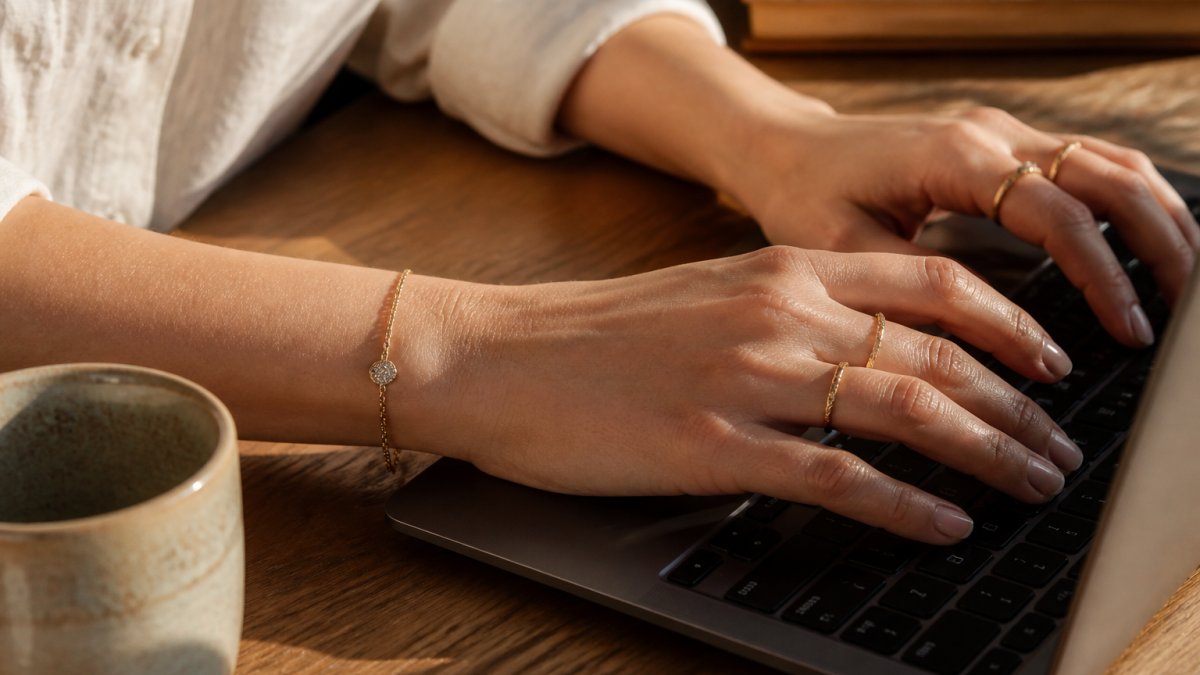
Founded by Abbey and Maria, Amoré Lux pairs deep expertise in design and innovation with a commitment to meaningful, intentional craftsmanship. Each piece is thoughtfully created to empower the wearer and reflect inner strength, while elevating everyday style.
Amoré Lux jewelry is thoughtfully created to reflect inner strength and grace. The collection is designed to celebrate love, light, and individual expression.
Best for: anyone drawn to fine jewelry with meaning behind it.
Mejuri: Traceable Gold and Versatile Everyday Pieces
Mejuri earns its place on traceability. The brand describes its gold sourcing as fully traceable, with a reported split of recycled gold and certified sources.
Its designs lean versatile and stackable, which suits everyday wear well. The tradeoff is that item-level sourcing details are not always shown per piece, so ask if a specific stone’s origin matters to you.
Best for: transparency-focused buyers who want stackable, versatile pieces.
Watch for: per-item sourcing detail varies; confirm the metal type (solid gold vs. gold-plated vermeil) on the product page before assuming daily-wear durability.
Baby Gold: Recycled 14-Karat Gold With an Unfussy Look
Baby Gold builds its identity around 100% recycled 14-karat gold and a large everyday-focused selection. If you want simple, unfussy pieces you can layer without thinking, this is a strong option. The recycled-gold claim is specific, which we like.
Where it falls short: warranty and repair details are not clearly published, so confirm them before buying a piece you plan to wear constantly.
Best for: simple layering pieces in recycled 14k gold.
Watch for: warranty details unclear; confirm solid vs. plated construction per item.
Ana Luisa, Holden, and Stella & Dot: Design-Led Options
Three more brands round out the list for different reasons. Ana Luisa runs a dedicated ethical collection and emphasizes craftsmanship and transparency, with a design language that skews minimalist and layer-friendly. Holden makes handmade, customizable, gender-neutral fine jewelry, a good fit if you want something personal, and customization is worth asking about for sizing and metal choice. Stella & Dot offers a socially responsible collection with genuine gold and diamond fine jewelry, though its catalog mixes fine and fashion pieces, so confirm which tier a given item belongs to.
Each is design-led first. Verify their sourcing specifics directly, since published detail varies by brand. A practical rule: if a brand cannot tell you the metal type, stone origin, and care instructions for a specific SKU, treat it as a fashion purchase rather than an everyday fine-jewelry investment.
| Brand | Standout Strength | Best For | Watch For |
|---|---|---|---|
| Amoré Lux | Meaningful, durable fine jewelry | Daily wear with intent | Confirm current pricing on site |
| Mejuri | Traceable gold sourcing | Transparency-focused buyers | Per-item sourcing detail varies |
| Baby Gold | 100% recycled 14k gold | Simple layering pieces | Warranty details unclear |
| Ana Luisa | Dedicated ethical collection | Browsing curated pieces | Limited material detail |
| Holden | Handmade, gender-neutral | Custom, personal pieces | Pricing not published |
| Stella & Dot | Socially responsible fine collection | Giftable fine pieces | Mixed fine/fashion catalog |
Before committing to any brand for daily wear, buy one small piece first, a stud or thin chain, and wear it for a few weeks. How it holds up to showers, gym sessions, and sleep tells you more about construction quality than any product page.
Readers who want a curated starting point can browse ethically sourced diamond jewelry rather than vetting every brand from scratch.
Sustainable Gold Jewelry: Recycled Metals and What the Labels Mean
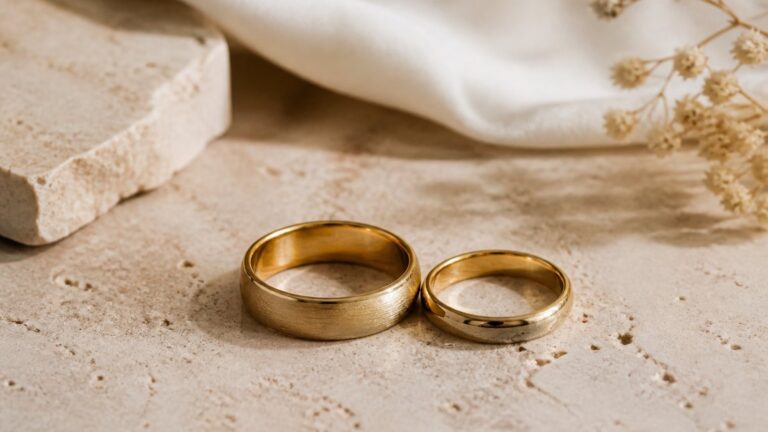
Recycled gold is gold reclaimed from existing jewelry, electronics, or industrial scrap and refined back to purity. It performs identically to newly mined gold; the difference is environmental, since recycling avoids new extraction.
The labels are where buyers get confused. “Recycled,” “responsibly sourced,” and “certified” are not interchangeable. A certification from a recognized standards body carries more weight than a brand’s own wording.
Recycled silver works the same way. It is real silver, refined and reused, and it tarnishes exactly like mined silver, so care routines do not change.
Responsibly Sourced Gemstones and Diamond Traceability
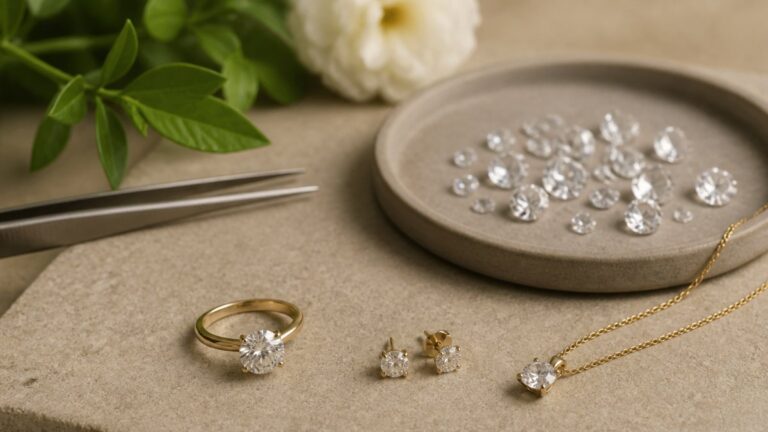
Diamond traceability means knowing a stone’s origin and journey, from mine to setting.
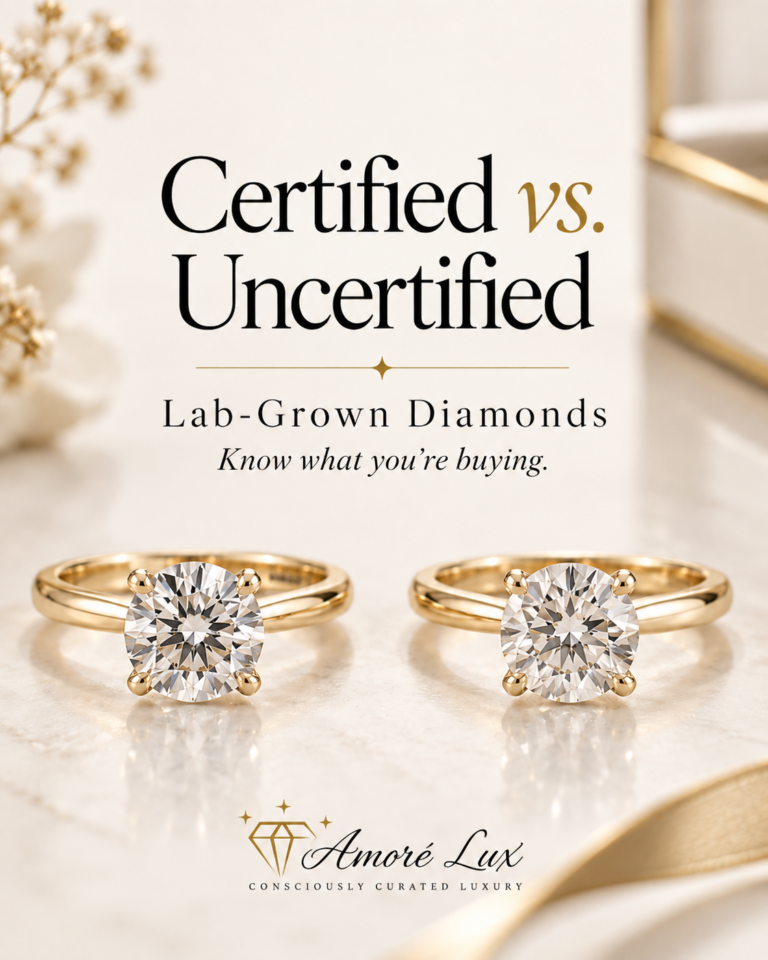
Lab-grown diamonds are a legitimate option here. They are chemically identical to mined diamonds and, per the Federal Trade Commission’s jewelry guides, must be clearly disclosed as lab-grown. Disclosure is your friend: it tells you exactly what you are buying.
For gemstones beyond diamonds, ask two questions: where was the stone sourced, and can the brand document it? Brands that publish traceable gemstone policies make this easy. Those that cannot should not get your everyday budget.
Everyday Fine Jewelry: Durability, Care, and Repair
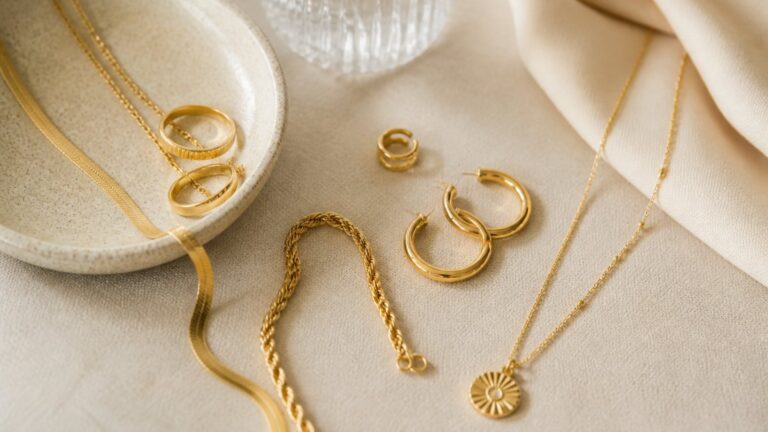
Fine jewelry survives daily wear when the metal is solid and the setting is secure. Solid gold and recycled silver outlast plated pieces by years, and a well-set stone will not loosen from normal knocks.
A simple care routine keeps pieces wearable:
- Remove jewelry before swimming, showering with harsh soaps, or heavy cleaning.
- Store pieces separately to avoid scratches.
- Wipe with a soft cloth after wear to remove oils.
- Have prongs checked periodically if you wear a ring daily.
Watch out: plated jewelry worn every day will eventually show the base metal, and no care routine prevents it. Buy solid metal if daily wear is the goal. Readers worried about wear and tear can review durable fine jewelry for active lifestyles for pieces built to take it.
Price, Value, and What You Actually Pay For
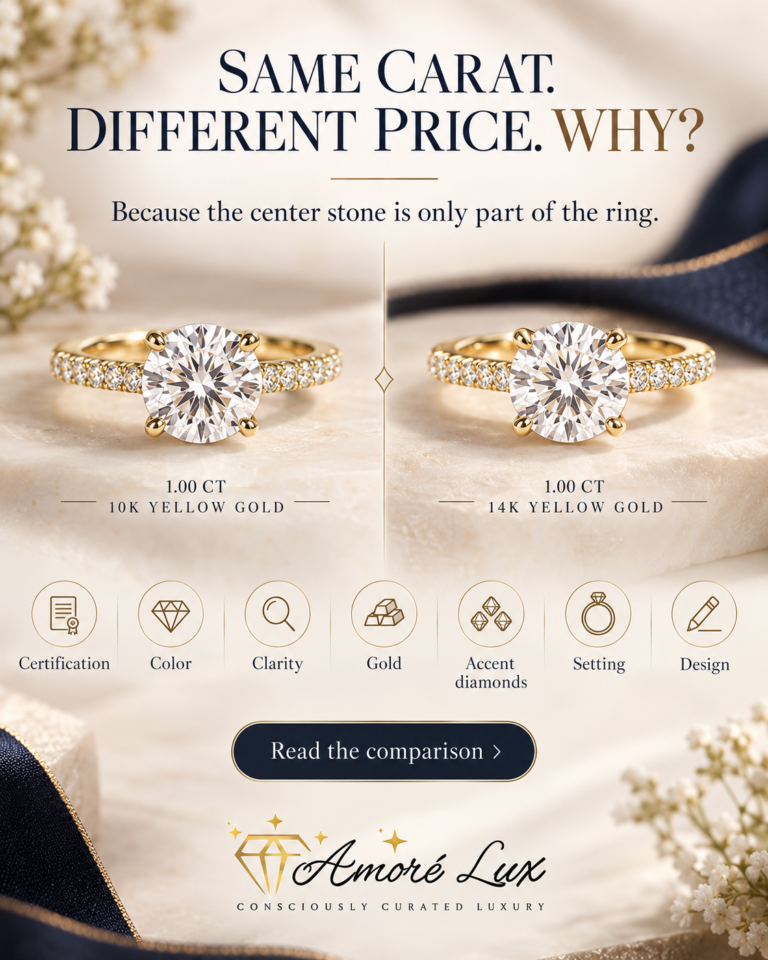
Price in ethical jewelry reflects three things: metal weight and purity, stone quality, and the cost of verified sourcing. You are paying for traceability and labor standards as much as materials. That is the honest answer to why ethical pieces often cost more than fast-fashion equivalents.
Value comes down to cost per wear. A solid-gold piece worn daily for years beats a cheaper plated piece replaced every season. When comparing brands, ask what the premium buys: named refiners, certifications, better settings, or repair support.
Check the Amoré Lux website for current pricing. Shoppers weighing cost against quality can compare affordable luxury jewelry brands to see where the premium lands.
Choosing Your Everyday Piece From Amoré Lux
Start with the piece you will actually wear daily: a ring, a chain, or a stud that fits your routine. Amoré Lux offers fine jewelry designed to elevate the everyday and carry meaning. Its pieces are created to celebrate love, light, and individual expression.
If you are ready to choose, explore our lab-grown diamond engagement rings and fine jewelry.
Frequently Asked Questions
How can I tell whether a jewelry brand is ethical?
Ask for specifics rather than slogans. A credible ethical jewelry brand can name its metal sources (recycled content or certified mines), explain gemstone origin, and describe labor conditions in its supply chain. Look for third-party certification, published sourcing figures, and a written policy on traceability. If a brand answers only with general language like committed to sustainability and gives no numbers, treat the claim as unverified until you see documentation.
Is recycled gold more ethical than newly mined gold?
Recycled gold avoids new mining, which reduces land disturbance and water use tied to extraction. It also keeps existing metal in circulation, so the material is chemically identical to mined gold and wears the same. That said, recycled content alone does not prove fair labor throughout a supply chain. Pair it with information about where the metal was refined and how the brand audits its suppliers before treating recycled gold as a complete ethical signal.
What should I look for in everyday fine jewelry?
Prioritize solid gold over plating if you wear a piece daily, since plating wears through with friction and handwashing. Check that settings are low-profile so they snag less on clothing, and ask about the warranty and repair policy before buying. Also confirm the clasp type on chains, because a weak clasp is the most common failure point.
How do I care for jewelry I wear every day?
Take pieces off before swimming, showering with harsh soaps, and heavy cleaning, since chlorine and abrasives dull metal and loosen settings. Wipe jewelry with a soft cloth after wear to remove oils, and store each piece separately to prevent scratches. Have prongs checked once a year if you wear a ring daily. For gemstone pieces, use warm water and mild soap rather than ultrasonic cleaners, which can damage certain stones.
What materials are used in sustainable jewelry?
Common materials include recycled gold and silver, fair-mined or certified metals, lab-grown diamonds, and traceable colored gemstones. Some brands also use reclaimed vintage stones. The material matters less than the documentation behind it: a recycled silver piece with a named refiner and audited labor practices is a stronger choice than a vague eco-friendly claim. Ask what the metal content is (for example 14-karat versus plated brass) before comparing prices.
The challenge with everyday ethical jewelry is not finding something pretty. It is finding something you can trust to hold up and stand behind. That is where we focus at Amoré Lux: thoughtfully crafted pieces, women-led design expertise, and a commitment to beauty without compromise. Get started with Amoré Lux and find jewelry that earns its place in your daily rotation.