7 Unique Engagement Rings With Colored Gemstones
Quick Summary
Colored gemstones give an engagement ring a personality that a white diamond often cannot, with sapphire, emerald and morganite among the most popular choices. The best stone depends on how the ring will be worn, since sapphire and ruby handle daily wear far better than opal or sunstone.
- Sapphire and ruby both rate 9 on the Mohs hardness scale, making them excellent for daily wear.
- Emerald rates 7.5 to 8 and usually needs a protective setting because it can chip.
- Opal rates 5.5 to 6.5 and is best reserved for occasional wear and special occasions.
- Ask for treatment and origin disclosures in writing before buying any colored gemstone ring.
- Ultrasonic cleaners can damage fractured or treated stones, so check before using one.
Table of Contents
- Why Colored Gemstones Are Changing Engagement Ring Style
- Best Alternative Gemstones for Engagement Rings, Compared Side by Side
- Sapphire Engagement Rings: Durability and Color Range
- Emerald Engagement Rings: Beauty With Everyday Considerations
- Gemstone Engagement Ring Durability: What Hardness Ratings Mean for Daily Wear
- How Pricing, Settings and Metals Affect Your Budget
- Booking a Consultation to Choose Your Colored Gemstone Ring
- Frequently Asked Questions
Why Colored Gemstones Are Changing Engagement Ring Style
Last Updated: November 7, 2026
Colored gemstones have moved from the fringe of bridal jewelry into the mainstream. Many couples now want a ring that looks like their own, not a copy of what everyone else is wearing. This guide walks through distinctive directions for an engagement ring built around a colored stone.
Here is the short version: a colored gemstone gives a ring a personality a white diamond often cannot. Sapphire brings depth, emerald brings a soft garden green, and morganite brings a blush warmth. The question is less whether to choose color and more which stone fits how the ring will actually be worn.
Many buyers start with the look and only later ask about wear. That order makes sense, but it helps to know which stones handle daily life well and which need more care. We cover both below, along with the metals, settings and budget factors that shape the final price.
Best Alternative Gemstones for Engagement Rings, Compared Side by Side
The most common alternatives are sapphire, ruby, emerald, morganite, tourmaline, opal and sunstone. Each one behaves differently, so comparing them on the same criteria makes the trade-offs clearer.
| Gemstone | Typical Look | Mohs Hardness | Everyday Wear | Treatment to Ask About | Typical Ring Price Band | Best For |
|---|---|---|---|---|---|---|
| Sapphire | Deep blue, plus pink, yellow, padparadscha | 9 | Excellent; resists scratches | Heat treatment is common and stable | $1,500-$8,000+ | Daily wear and long-term use |
| Ruby | Vivid red to pinkish red | 9 | Excellent; same corundum family as sapphire | Heat and lead-glass filling (filling lowers durability) | $2,000-$10,000+ | A bold, classic red worn daily |
| Emerald | Rich green | 7.5-8 | Good with a protective setting; chips on hard knocks | Oil or resin filling is standard; disclose it | $1,500-$7,000+ | Character pieces and vintage styles |
| Morganite | Soft pink to peach | 7.5-8 | Good with care; softer than sapphire | Usually untreated; ask about coatings | $900-$4,000 | Romantic, gentle color at a moderate price |
| Tourmaline | Wide color range, often multi-tone | 7-7.5 | Moderate; needs a bezel or halo for daily wear | Heat and irradiation are common | $800-$3,500 | Unique, one-of-a-kind color |
| Opal | Iridescent play-of-color | 5.5-6.5 | Delicate; best for occasional wear | Sugar or smoke treatment; doublets and triplets | $500-$3,000 | Statement pieces and special occasions |
| Sunstone | Warm orange to red with schiller | 6-6.5 | Moderate; protect from knocks | Usually untreated; some copper diffusion | $600-$2,500 | Warm, unusual color on a budget |
Mohs Hardness
Sapphire and ruby share corundum’s hardness of 9, which is why both hold up to daily wear better than almost any other colored stone. Emerald and morganite sit in the 7.5-8 range: hard enough for a ring, but soft enough that a bezel or halo setting earns its keep. Tourmaline, opal and sunstone trade durability for color variety and lower entry prices, so they suit buyers who will rotate the ring rather than wear it every day.
Treatment disclosure is the column most shoppers never see on a product page. Heat treatment on sapphire and ruby is routine and permanent, while lead-glass filling in ruby and oiling in emerald can affect how the stone ages. Ask for the treatment in writing before you buy.
Sapphire Engagement Rings: Durability and Color Range
Sapphire is a corundum, and corundum sits at 9 on the Mohs hardness scale, second only to diamond at 10 (Mohs Scale). That hardness makes sapphire one of the most practical colored stones for a ring worn every day.
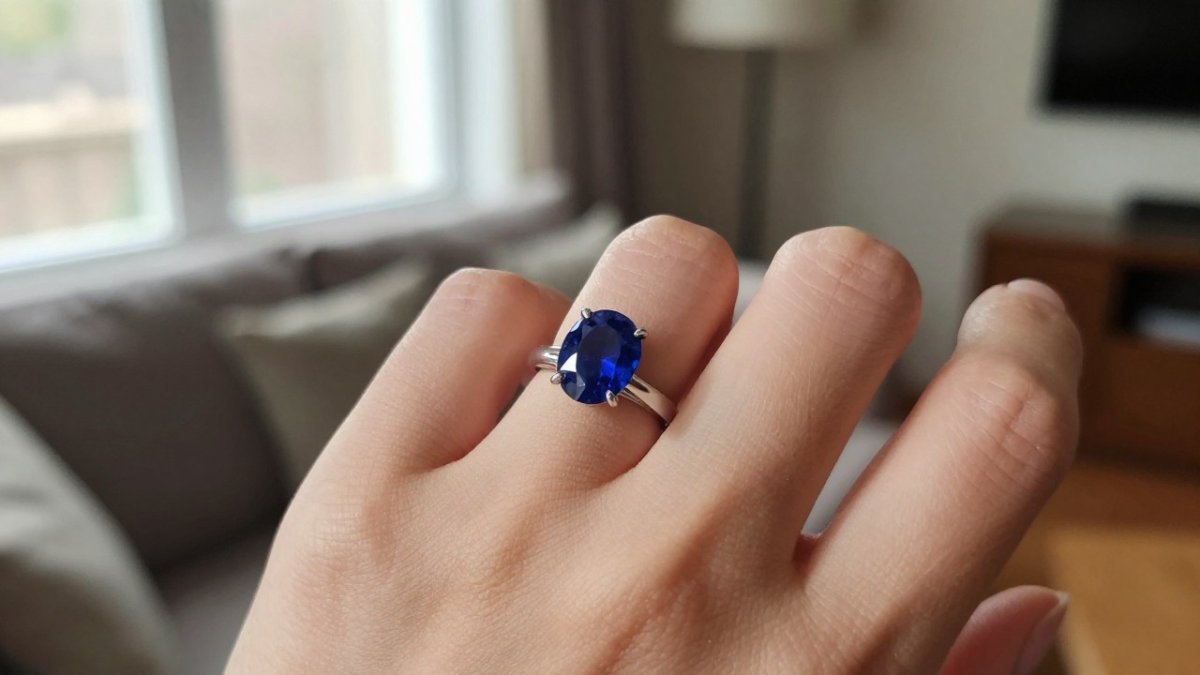
Color is where sapphire stands out. Blue is the classic, but sapphires also appear in pink, yellow, and the rare padparadscha shade. Browse blue sapphire and diamond band styles to see the color in real pieces. See the alternating blue and white stackable band for a blue sapphire look in a real piece.
Deep blue sapphire engagement ring with a warm, softly blurred background
A common mistake is to choose a very pale sapphire for the look without checking the setting. A lighter stone can look washed out next to a bright white metal, so test a few metal tones before committing.
Emerald Engagement Rings: Beauty With Everyday Considerations
Emerald is one of the most striking colored stones, with a green that many people find more distinctive than a classic diamond. It is also one of the more delicate options. Emeralds usually contain small internal fractures, and they can chip if they take a hard knock.
On the Mohs scale, emerald sits around 7.5 to 8. That is harder than many everyday materials, but it is softer than sapphire. For a ring worn daily, a protective setting and occasional professional inspection help preserve the stone.
Emerald rings suit buyers who value character and are willing to take off the ring for heavy work or sports. They also work well as an heirloom piece, since the stone’s color is one of the most memorable in fine jewelry.
Gemstone Engagement Ring Durability: What Hardness Ratings Mean for Daily Wear
The Mohs scale ranks minerals by how well they resist scratching. A higher number means the stone is harder to scratch, but hardness alone does not tell the whole story (More than the Mohs Scale | Understanding Gem Durability). Toughness, which describes resistance to chipping or breaking, matters just as much for a ring.
A practical way to read the numbers: a stone rated 9 or higher, like sapphire, handles daily knocks well. A stone rated 7 or 8 needs a protective setting. A softer or more fragile stone, such as opal, calls for careful handling and an occasional-wear mindset.
Care matters for every colored stone. Clean gently with warm water and mild soap, avoid harsh chemicals, and have settings checked periodically by a jeweler. Watch out: ultrasonic cleaners can damage fractured or treated stones, so ask before using one.
How Pricing, Settings and Metals Affect Your Budget
Colored gemstone prices vary widely, and the gap between two rings that look similar online can be several thousand dollars. Stone type, size, color intensity, clarity, origin, treatment and the setting all move the number, so it helps to know which lever you are pulling.
Stone type sets the floor.
Origin and treatment affect both price and disclosure. Ask for the treatment and origin in writing before you buy.
The setting and metal shape the total as well. A practical approach is to fix the stone first, then compare the same stone across two or three settings to see where the budget goes.
Pricing depends on the stone, metal and design you choose. Visit the Amoré Lux website for current pricing on a specific ring, or request a quote before you decide.
Gift-givers often start with a budget and work backward. Choosing a stone that fits the budget while keeping the setting solid usually gives the best long-term result. Our guide on choosing meaningful jewelry gifts that last walks through this decision in more detail.
Booking a Consultation to Choose Your Colored Gemstone Ring
Choosing a colored gemstone ring is easier with a clear plan. Decide how the ring will be worn, which color you are drawn to, and what budget fits. Then narrow the options by durability and setting.
Once you have a shortlist, review the available designs, check the setting and metal, and confirm the details directly with the brand.
Frequently Asked Questions
What are some examples of engagement rings with colored stones?
Common examples include sapphire rings in blue, pink, and yellow tones, emerald rings in deep green, morganite rings in soft peach-pink, and tourmaline rings that show several colors in one stone. Start with the color you are drawn to, then narrow choices by durability and budget.
Are colored gemstone engagement rings durable enough for everyday wear?
Durability depends on the gemstone and the setting. Sapphire ranks 9 on the Mohs hardness scale, which makes it highly resistant to scratches, while emerald ranks around 7.5 to 8 and is more prone to chips and cracks, so it benefits from protective settings and gentler daily habits. Softer stones such as opal need more care. Choosing a protective setting, removing the ring for heavy work, and having prongs checked periodically will help any colored stone last.
Which colored gemstones are best for engagement rings?
Sapphire is often recommended for daily wear because of its hardness and wide color range. Emerald offers rich green tones but needs more protection. Morganite provides a soft, romantic pink with good durability. Tourmaline offers unusual color combinations, and ruby is valued for its deep red. Your lifestyle, the setting you prefer and the level of everyday wear you expect should guide the choice more than trend lists alone.
Can you wear a gold or silver band with a colored gemstone engagement ring?
Yes. Many people pair a colored gemstone engagement ring with a plain yellow, white or rose gold band, and the metal you choose can complement the stone’s color. Yellow gold tends to enhance warm sapphires and emeralds, while white gold or platinum keeps cool blues and greens looking crisp. Wearing the bands together can also protect the setting from knocks, so check that the band sits flush against the engagement ring’s profile.