Lab-Grown Diamonds Explained: What Are You Actually Buying?
Shopping for a diamond can quickly turn into alphabet soup. VS. D-F. 1.5 CT. IGI. 14K. If you are new to fine jewelry, none of those specifications are especially helpful until someone explains what they mean.
What is a lab-grown diamond?
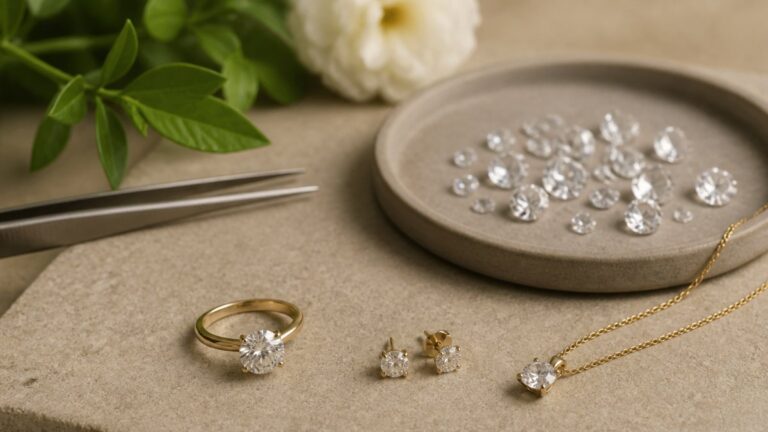
A lab-grown diamond is created under controlled conditions rather than mined from the earth. When evaluating one for jewelry, you will still encounter many of the same characteristics shoppers use to compare mined diamonds. That brings us to the famous 4Cs.
Carat
Carat is a measurement of weight. It is often treated as shorthand for diamond size, but two diamonds with the same carat weight can have slightly different visible dimensions depending on shape and proportions. That is why looking at measurements can matter, particularly when comparing center stones.
Cut
Cut describes how a diamond’s proportions and faceting interact with light. This is different from shape. Round, oval, pear and emerald are shapes. Cut quality concerns how the diamond itself has been proportioned and finished.
Color
Diamond color grades describe the amount of visible body color in a stone. Generally, diamonds closer to the colorless end of the grading scale command more attention from shoppers, but your preferred metal and personal taste also affect how noticeable subtle differences may be.
Clarity
Clarity describes internal and external characteristics in a diamond. You will commonly see grades such as VS and SI when shopping. Many characteristics require magnification to observe, which is why shoppers should avoid assuming that a higher clarity grade automatically creates a dramatically different appearance from normal viewing distance.
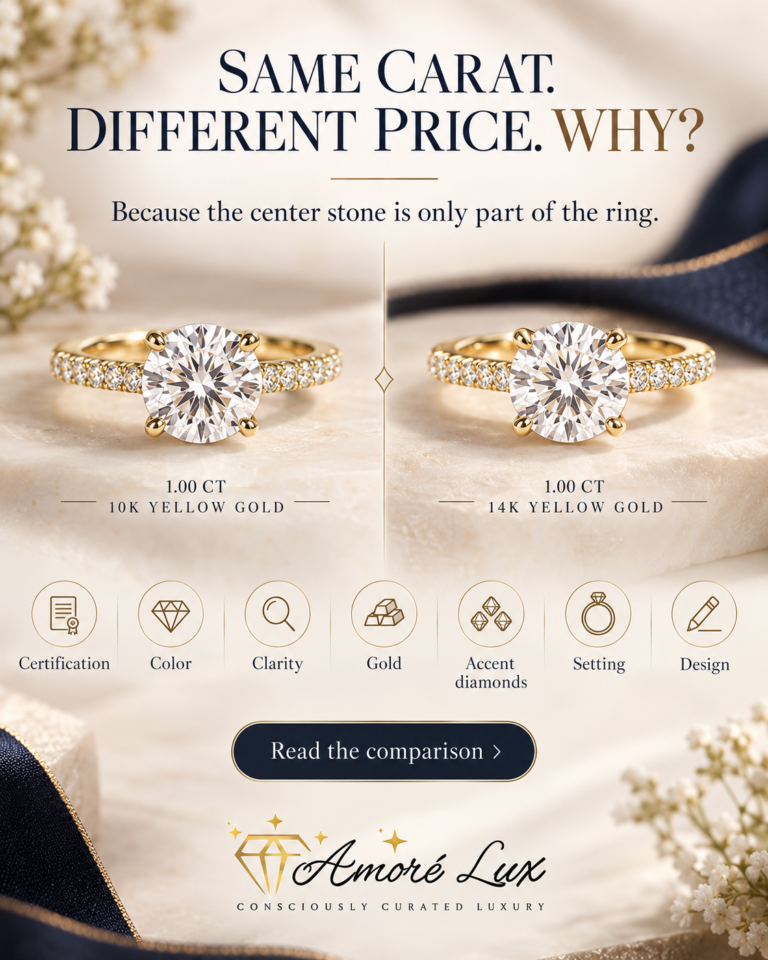
1 ct round solitaire in 14K yellow gold

A single round lab-grown diamond keeps the focus on clean lines. The listing specifies a 1 ct stone, D-F color, VS clarity and IGI certification.
The fifth decision: the setting
Take the same general diamond and place it in a simple solitaire, a hidden halo, a traditional halo, a three-stone setting or a wide diamond band. The finished rings can feel completely different. Your setting also influences how high the diamond sits, how much metal is visible and how much additional sparkle surrounds the center.
2 ct pear solitaire in 14K yellow gold
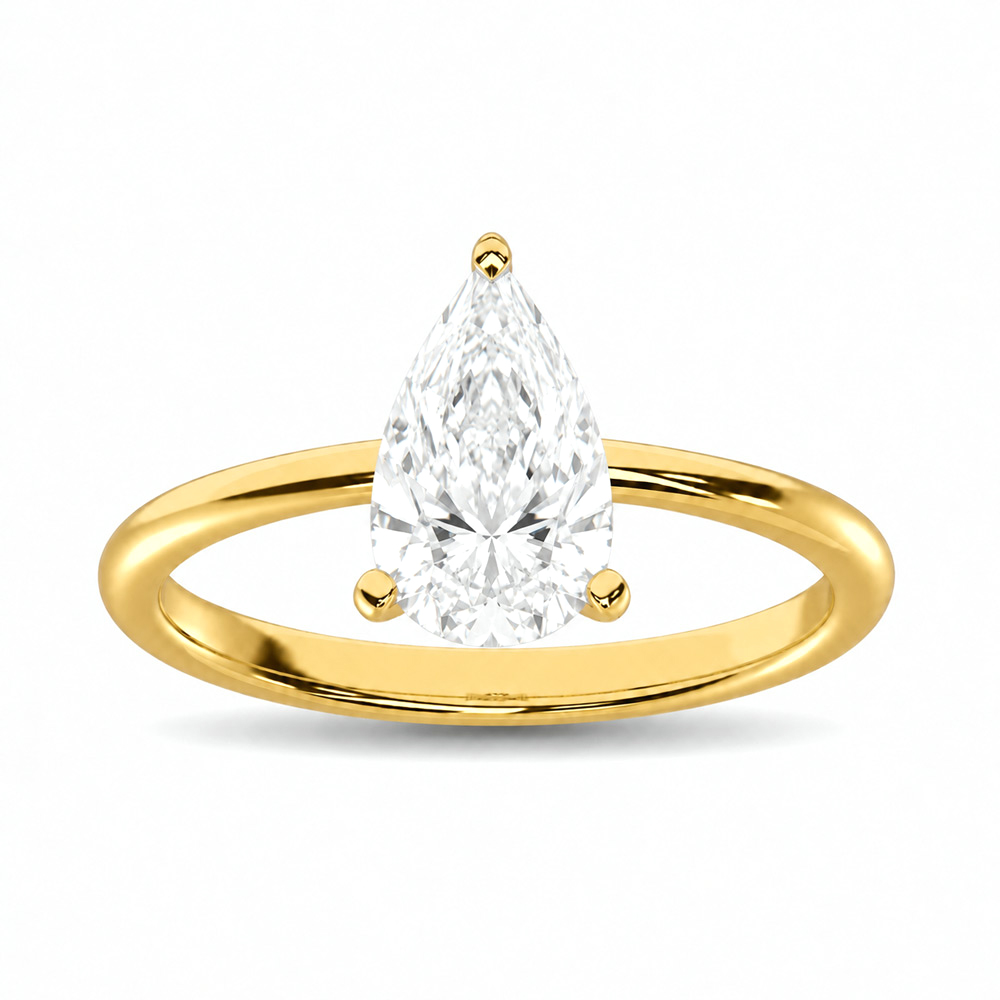
The pointed pear silhouette brings a distinctive shape to a clean solitaire setting. The listing specifies a 2 ct lab-grown diamond and IGI certification.
Don’t shop one number
A common mistake is focusing on a single specification. Instead, think about the entire ring. What shape do you love? What setting will you enjoy wearing every day? Which specifications matter to you? What fits comfortably within your budget? That is how you find a ring rather than simply buying a spreadsheet of diamond grades.
Explore Amoré Lux lab-grown diamond jewelry and start discovering the combination that feels like yours.