Buy Ethically Sourced Diamond Jewelry Online: Top Picks
Table of Contents
- Why Buying Ethically Sourced Diamond Jewelry Online Matters
- How to Verify Diamond Sourcing Before You Buy
- Ethically Sourced Natural Diamonds: What to Look For
- Recycled Gold Diamond Jewelry: A Sustainable Choice
- Ethical Engagement Rings: Top Online Retailers Compared
- Price Comparison and Value by Diamond Type
- Online Purchase Protections and Service Policies
- Conclusion
- Frequently Asked Questions
Last Updated: October 19, 2026
Why Buying Ethically Sourced Diamond Jewelry Online Matters
When you buy ethically sourced diamond jewelry online, you are making a choice about traceability, labor conditions, and environmental impact all at once.
The market has shifted. Shoppers now ask where a stone came from and who handled it. That is a healthy change, because the diamond supply chain is long and opaque by default.
Below, we walk through the verification steps that matter, the trade-offs between natural, lab-grown, and reclaimed stones, and the purchase protections worth checking before you enter card details.
Ethical sourcing is a chain of evidence, not a single label. Ask for documentation at every stage: origin, cutting, metal provenance, and labor standards.
How to Verify Diamond Sourcing Before You Buy
Verification starts with paperwork you can check independently. A reputable seller should hand over certification without being pushed.
Diamond sourcing verification means confirming a stone’s origin, its cutting and polishing history, and the labor conditions behind it. Third-party grading reports from independent laboratories are the baseline, not the finish line.
Use this checklist before you commit:
- Grading report from an independent lab, with a lookup number you can verify yourself
- Written origin statement for the stone (country or region, plus mine or grower where available)
- Metal provenance: recycled, Fairmined, or newly mined, stated in writing
- Conflict-free policy that names the specific standard followed, not just the phrase
- Labor and fair-wage statement covering cutting and setting facilities
- Return window and warranty terms in writing before purchase
- Clear answer to the question: who cut this stone, and where?
The Federal Trade Commission’s jewelry advertising guidance sets the rules for how retailers may describe diamonds, including lab-grown stones. If a product page uses vague language like “eco-friendly” with no standard named, treat that as a gap.
A “conflict-free” badge with no named standard behind it tells you almost nothing. Ask which certification body issued it and request the certificate number.
Ethically Sourced Natural Diamonds: What to Look For
Natural stones carry the longest and most complex supply chain, which makes documentation more important, not less. Ethically sourced natural diamonds should come with a clear origin trail and a stated labor standard.
The Kimberley Process Certification Scheme is the baseline for rough diamond trade controls, but it addresses conflict financing, not broader labor or environmental practice. Shoppers who care about fair labor need to look past it.
What to check on a natural stone:
- Origin disclosure at country level, ideally with mine-level detail
- Independent grading report with a verifiable number
- A named fair-labor or responsible-mining standard, if the seller claims one
- Written confirmation of where cutting and polishing happened
Ask directly: “Which standard does this stone meet, and can I see the certificate?” A seller who cannot answer that in writing is telling you something useful.
Recycled Gold Diamond Jewelry: A Sustainable Choice
Metal choice matters as much as stone choice, and it is often overlooked. Recycled gold diamond jewelry uses refined existing gold rather than newly mined metal, which reduces demand for fresh extraction.
Recycled gold is chemically identical to newly mined gold. The difference is provenance and environmental cost. Refining existing metal avoids the land disturbance and water use tied to new mining, though the refining process itself still carries an footprint.
Look for these signals:
- “Recycled gold” or “Fairmined gold” stated explicitly, with the standard named
- Metal purity marked clearly (14k, 18k, platinum 950)
- A written statement on where the recycled metal was refined
- Consistency between the website claim and the certificate that ships with the piece
Ask whether the setting and band use the same metal source as the headline claim. Many listings tout recycled gold for the band while the setting uses standard stock.
Ethical Engagement Rings: Top Online Retailers Compared
Comparing retailers side by side is the fastest way to see what each one actually discloses. Ethical engagement rings now come from a range of online sellers, and the useful comparison is not brand personality, it is what each seller will put in writing before you pay.
Use the same four disclosure questions on every retailer:
- Stone origin: Will they state country (and mine or grower where available) in writing?
- Named standard: Do they name the specific certification or standard behind a “conflict-free” or “ethical” claim, or just use the phrase?
- Metal provenance: Is the band and setting metal described as recycled, Fairmined, or newly mined, and does the certificate match the website?
- Policy transparency: Are returns, warranty, resizing, and shipping insurance published before checkout?
Here is how the options stack up on those factors, plus what each is best suited for.
| Retailer | Diamond Options | Metal Claims | Disclosure to Request | Best For |
|---|---|---|---|---|
| Amoré Lux | Curated fine jewelry, intentional craftsmanship | Ask for written provenance per piece | Grading report number, metal statement, named standard | Design-led shoppers who will request documentation directly |
| Do Amore | Engagement and wedding rings | Ethical positioning stated | Named sourcing standard and certificate number | Engagement-focused buyers who want a stated mission |
| Clean Origin | Lab-grown and natural diamonds | Lab-grown described as never mined | Grower details and independent grading report | Budget-conscious shoppers comparing lab-grown |
| Laura Preshong | Ethically sourced diamonds or gemstones | Handcrafted collection | Verification process and origin statement | Handcrafted, design-forward engagement rings |
| Rosec Jewels | Lab-grown and natural stones | Described as verified | Which standard applies, plus return policy | Broad catalog comparison shopping |
Beyond Engagement Rings: Earrings, Necklaces, and Everyday Pieces
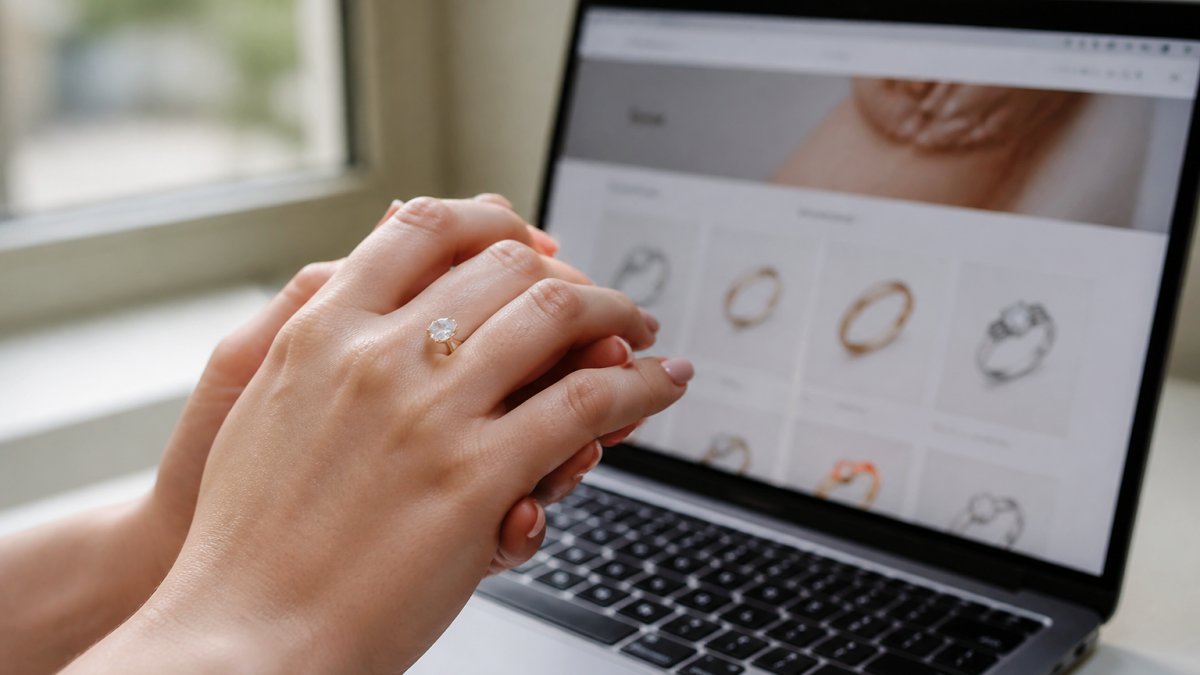
Most ethical-sourcing content stops at engagement rings, but the same disclosure questions apply to studs, pendants, tennis bracelets, and stacking bands. When you shop non-engagement diamond jewelry online, ask for the same grading report number and metal statement, a pair of diamond studs can carry the same traceability paperwork as a solitaire. Retailers that publish provenance for engagement rings usually extend it to everyday pieces; if a seller only documents the bridal line, treat that as a signal about the rest of the catalog.
Online Purchase Protections to Compare
Policy pages are where online retailers separate themselves. Before you buy, compare:
- Return window: Confirm the number of days and whether engraved or custom pieces are excluded.
- Warranty: Check what it covers, especially setting and band durability under daily wear.
- Resizing and repairs: Ask about cost and turnaround before purchase.
- Shipping and insurance: Confirm signature-required delivery and transit coverage.
- Independent grading: Verify the report number on the lab’s own site, not just the retailer’s page.
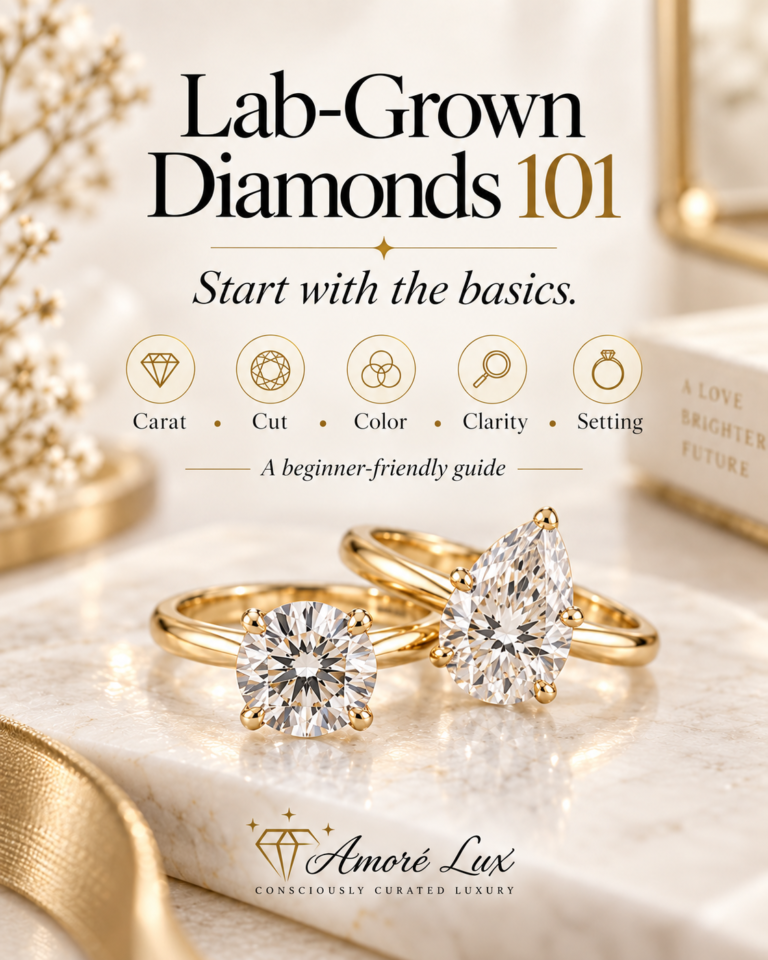
Our own pick for shoppers who want a curated, design-led collection is Amoré Lux. Founded by Abbey and Maria, the brand brings deep experience in jewelry design, manufacturing, and innovation to pieces built around intentional craftsmanship. If you want jewelry that radiates love, light, and confidence without compromising on how it was made, we recommend starting there.
Shoppers who want a curated, design-led collection of fine jewelry and are willing to request provenance documentation directly from the seller.
Price Comparison and Value by Diamond Type
Price differences between diamond types come down to origin, rarity, and documentation, not just size. Most shoppers comparing online listings see a wide spread for what looks like the same carat weight and clarity, the gap is usually explained by three mechanisms: how the stone was produced, how much traceability paperwork accompanies it, and how liquid the resale market is for that category.
What Drives the Price Gap
- Natural diamonds carry the highest cost because supply is finite and the supply chain, mining, sorting, cutting, grading, is long and documented at each step. A grading report and origin statement add cost but also underpin resale value.
- Lab-grown diamonds cost less because production scales differently; a grower can produce many stones of similar quality, and the documentation is typically a grading report plus grower details. The trade-off is resale: the secondary market for lab-grown stones is thinner and prices have tended to soften over time.
- Reclaimed diamonds sit in the middle. They are existing stones re-entering the market, often with a prior grading report and condition notes. You get a smaller environmental footprint and a unique stone, but selection is limited and condition varies.
Realistic Price Ranges to Expect
Exact prices depend on carat, cut, clarity, color, and setting, so treat these as planning ranges rather than quotes. For a round brilliant diamond in the 1-carat range with a mid-grade clarity and color, online listings commonly fall into these bands:
| Diamond Type | Typical Online Price Band (1 ct, mid-grade) | Documentation to Expect | Best For |
|---|---|---|---|
| Natural | Roughly $4,000-$8,000 for the stone alone | Independent grading report, origin statement | Traditional buyers, resale interest |
| Lab-grown | Roughly $800-$2,500 for the stone alone | Grading report, grower details | Budget efficiency, larger stones |
| Reclaimed | Roughly $2,000-$5,000 depending on prior report and condition | Prior grading report, condition notes | Smaller footprint, unique pieces |
Setting costs add to every category: a simple 14k gold solitaire setting commonly runs a few hundred dollars, while platinum or pavé settings push higher. Metal choice, recycled, Fairmined, or newly mined, affects cost less than the stone, but it is the line item most often left out of online price comparisons.
Compare stones at the same carat, cut, clarity, and color before judging price. A lower price often reflects a lower clarity grade or a shallower cut, not a better deal.
How to Compare Value, Not Just Price
Value depends on what you are optimizing for. If budget efficiency matters most, lab-grown offers more carat for the money. If resale and tradition matter, natural stones hold different appeal. Reclaimed stones offer a middle path with a smaller environmental footprint.
We do not publish fixed prices, because cost depends on carat, cut, clarity, and setting. Check current pricing directly with Amoré Lux before you compare.
Online Purchase Protections and Service Policies
Buying online removes the showroom, so the policy page becomes your safety net. Read it before you fall in love with a setting.
Four protections matter most:
- Return window: Confirm the number of days and whether engraved or custom pieces are excluded
- Warranty: Check what it covers, especially setting and band durability under daily wear
- Resizing and repairs: Ask about cost and turnaround before purchase
- Insurance and shipping: Confirm signature-required delivery and transit coverage
Request everything in writing. A seller who answers policy questions clearly before the sale is more likely to honor them after.
Conclusion
The hard part of buying ethically sourced diamond jewelry online is not finding beautiful pieces. It is confirming that the sourcing story holds up under scrutiny. Ask for certification numbers, named standards, and written metal provenance, and compare retailers on disclosure rather than marketing language.
At Amoré Lux, we build fine jewelry around intentional craftsmanship and a commitment to beauty without compromise. Every piece is designed to help you feel beautiful, connected, and empowered. Start with our curated collection and ask us for the provenance details on any piece you are considering.
Frequently Asked Questions
How can I verify that a diamond is ethically sourced?
Ask for the diamond’s certificate from a recognized lab like GIA or IGI, and check that it states the stone’s origin. Look for brands that publish their sourcing policies and use traceable supply chains. For natural diamonds, the Kimberley Process certification is a baseline, but it only confirms the stone is conflict-free, not that it was mined responsibly. For a deeper check, ask about the specific mine and whether the brand conducts third-party audits.
Can you get an ethically sourced natural diamond?
Yes, but it requires more homework than lab-grown. Look for retailers that provide documentation on the mine of origin and adhere to standards like the Responsible Jewellery Council’s Code of Practices. Some brands offer American-mined stones or Fairmined gold settings. Expect to pay a premium for fully traceable natural diamonds, and always ask for the chain of custody from mine to market.
Are lab-grown diamonds more ethical than natural diamonds?
Lab-grown diamonds avoid the land disruption and labor issues associated with large-scale mining, but they are energy-intensive to produce. The ethics depend on the producer’s energy source and labor practices. Natural diamonds can be ethical if they come from verified, responsibly managed mines that support local communities. Neither option is automatically ethical; both require checking the specific brand’s transparency and certifications.
What should I look for when buying ethical diamond jewelry online?
Check for third-party certifications, a published sourcing policy, and details about metal origin (recycled or Fairmined). Read the return and warranty policies carefully. Look for customer reviews that mention durability and service. Also, confirm whether the brand offers independent grading reports for the center stone and melee diamonds. A transparent brand will readily answer questions about its supply chain.