Blue Nile vs Brilliant Earth engagement rings compared
Last Updated: November 9, 2026
Quick Summary
Blue Nile and Brilliant Earth engagement rings differ mainly in their diamonds: Blue Nile offers a deeper catalog of natural diamonds, while Brilliant Earth emphasizes lab-grown stones, responsibly sourced metals, and showroom consultations. Compare matched stones on the same day, then weigh cut grade, setting durability, return window, and resize policy.
- Benchmark a 1.00 ct round brilliant, Excellent cut, G color, VS1 clarity with the same lab report at both retailers.
- A halo or pavé setting can add more to the total than the gap between G and H color grades.
- Confirm the return window, refund timing, return shipping, and warranty coverage in writing before you pay.
- Engraved, custom, and made-to-order rings are commonly excluded from returns or final sale.
- Confirm the resize policy for your specific metal and setting before ordering, not after.
Table of Contents
- Blue Nile vs Brilliant Earth engagement rings review: How the two retailers differ
- Diamond selection and inventory: natural vs lab-grown
- Blue Nile vs Brilliant Earth engagement ring price and value for money
- Settings, customization, and craftsmanship
- Blue Nile vs Brilliant Earth engagement rings Reddit buyers weigh in
- Sourcing, sustainability, and independent verification
- Brilliant Earth vs Blue Nile vs James Allen: three-way comparison
- Returns, warranties, and after-sale service timelines
- Frequently Asked Questions
Blue Nile vs Brilliant Earth engagement rings review: How the two retailers differ
Choosing between Blue Nile and Brilliant Earth engagement rings comes down to a simple split: Blue Nile and Brilliant Earth take different approaches to the diamonds they sell, and the differences show up in selection, price, and after-sale care. Below, we break down diamond inventory, value for money, settings, and return timelines so you can judge both against your own priorities.
Blue Nile at a glance
Blue Nile built its name as an online-first jeweler with a deep catalog of natural diamonds. You can filter by shape, carat, cut, color, and clarity, then pair a loose stone with a setting. The trade-off is that most of the experience is self-directed, so buyers who want hand-holding may find it clinical.
Brilliant Earth at a glance
Brilliant Earth positions itself around responsibly sourced metals and a growing lab-grown diamond inventory, emphasizing traceability, recycled precious metals, and contemporary design. It also keeps a network of showrooms for in-person consultation. Compared with Blue Nile, the catalog is narrower but more curated, and the brand story does more of the selling.
Diamond selection and inventory: natural vs lab-grown
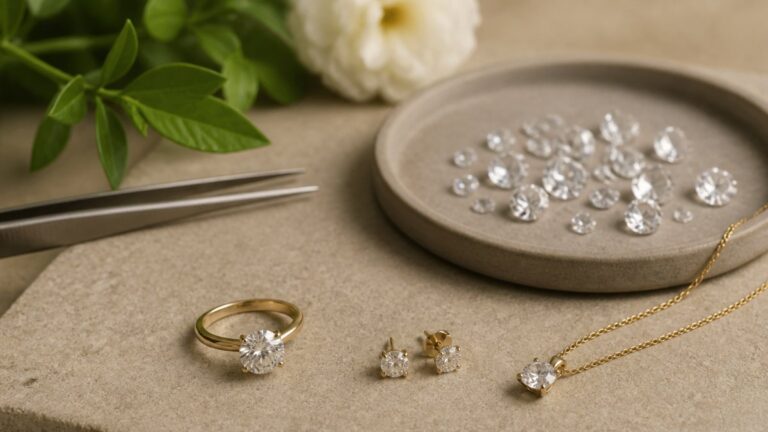
The biggest practical difference sits in the stone itself. If you are still weighing the two stone types, our guide to lab-grown vs mined diamonds for engagement rings explains how they differ in origin, grading, and long-term value.
The 4Cs and grading reports at each retailer
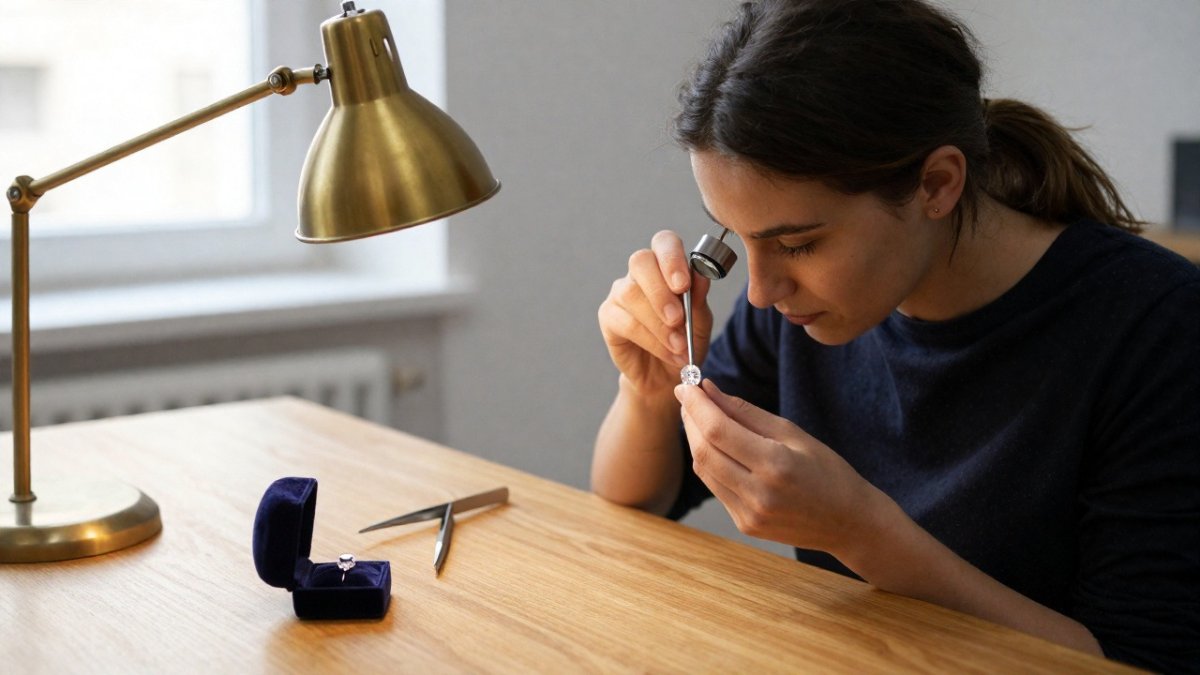
Ask any jeweler for the grading report number before you buy, and verify it directly with the issuing lab. Cut grade drives brilliance more than any other factor, so do not trade cut quality for a bigger carat weight.
Blue Nile vs Brilliant Earth engagement ring price and value for money
Price comparisons between jewelers only mean something when the stones match. A one-carat round brilliant with the same cut grade, color grade, clarity grade, and grading lab is a sound benchmark.
Build a matched-stone benchmark before you compare totals
- Pick one shape (start with round brilliant, since it has the deepest inventory at both retailers).
- Fix carat at 1.00 ct, cut at Excellent, color at G, and clarity at VS1.
- Require a grading report from the same independent lab on both stones.
- Record the loose-stone price, then add the same setting style (a six-prong solitaire in 14K white gold is the cleanest control) to get a total ring price.
Run that benchmark on the same day at each retailer you consider. Inventory turns over constantly, so a comparison built from last month’s screenshots is not verifiable.
What drives the total price at each retailer
| Price lever | Blue Nile | Brilliant Earth |
|---|---|---|
| Stone source | Natural diamonds dominate the catalog; lab-grown available | Lab-grown emphasized; natural available |
| Setting cost | Wide range from plain solitaire to elaborate halo | Wide range, with a design-led premium on signature styles |
| Metal choice | Platinum and golds priced separately from the stone | Platinum and recycled golds priced separately from the stone |
| Custom work | Made-to-order settings add lead time and cost | Custom and signature designs add lead time and cost |
| Sales tax | Applied based on shipping destination | Applied based on shipping destination |
A halo or pavé setting can add more to the total than the difference between a G and an H color grade, so decide on the setting before you fix the stone budget.
Setting costs to budget for
A plain solitaire is the lowest-cost path at either retailer. A halo adds metal and labor, a pavé band adds small stones and hand-setting time, and three-stone designs add two side stones.
Watch out: comparing a lab-grown total against a natural-diamond total is a stone-source comparison, not a like-for-like price comparison.
How to judge value beyond the sticker
Value is not the lowest number. It is the lowest number for a ring you will still be happy with in ten years. Weigh four things against the price: the cut grade, the setting’s durability under daily wear, the return window, and the resize policy.
If you are still deciding between stone types, our guide to lab-grown vs mined diamonds for engagement rings explains how origin affects grading and long-term resale expectations, which is the part of “value” that price tags do not capture.
Settings, customization, and craftsmanship
Setting choice shapes both the look and the durability of a ring. A solitaire is timeless and easy to resize; a halo adds apparent size; a pavé band adds sparkle but introduces more small stones that can loosen over years of daily wear. Milgrain detailing and two-tone metal work separate a considered ring from a catalog pick.
Metal type matters too. If you want to see how a three-stone design reads in person, browse the lab-grown diamond engagement rings we carry. For buyers drawn to color, a colored-stone engagement ring shows how a center stone changes the whole composition.
Watch out: ordering a custom design without confirming the resize policy first. A ring that cannot be resized comfortably is a costly mistake.
Blue Nile vs Brilliant Earth engagement rings Reddit buyers weigh in
Reddit threads on Blue Nile vs Brilliant Earth engagement rings tend to repeat three themes: praise for Blue Nile’s stone selection alongside criticism of its lack of hand-holding; praise for Brilliant Earth’s sourcing transparency alongside complaints about longer fulfillment windows; and flags for inconsistent post-purchase communication at both. Treat forum posts as directional, not definitive: unhappy buyers post more often than satisfied ones.
Sourcing, sustainability, and independent verification
Sourcing claims deserve scrutiny at both retailers. Independent verification is the step most buyers skip: confirm the grading report with the lab, and ask for written sourcing documentation rather than accepting a webpage claim.
As documented in FTC guidance on jewelry marketing claims, environmental and origin claims in jewelry advertising must be truthful and substantiated. That standard applies to every retailer, including the ones with the best storytelling.
Brilliant Earth vs Blue Nile vs James Allen: three-way comparison
Adding James Allen changes the picture. James Allen is known for high-resolution stone imagery and a large natural diamond inventory, putting it closer to Blue Nile than to Brilliant Earth on positioning. Brilliant Earth wins on sourcing narrative and lab-grown depth, Blue Nile on raw catalog size, and James Allen on visual stone inspection before purchase.
Returns, warranties, and after-sale service timelines
After-sale policy is where marketing claims meet reality, and it is the part of the purchase most buyers skim. Return windows, refund timing, and warranty terms determine your risk if the ring arrives and something is wrong. Below is how to compare the two retailers on the same four questions, plus the after-sale services that generate the most complaints.
The four questions to ask before you order
- What is the return window, counted from delivery or from order date?
- Is the refund issued to the original payment method, and how long does it take to post?
- Who pays return shipping and insurance, and is a signature required?
- What does the warranty cover, prong tightening, stone loss, rhodium re-plating, and for how long?
Get the answers in writing (email or chat transcript) before you pay. Policy pages change, and the version on the site the day you order is the version that governs your purchase.
Return and exchange timeline comparison
| Policy element | Blue Nile | Brilliant Earth |
|---|---|---|
| Return window | Confirm the current window on the policy page before ordering; it is typically measured in days from delivery | Confirm the current window on the policy page before ordering; it is typically measured in days from delivery |
| Refund method | Original payment method, subject to inspection | Original payment method, subject to inspection |
| Return shipping | Confirm who pays and whether insurance is required | Confirm who pays and whether insurance is required |
| Engraved rings | Commonly excluded or subject to a fee | Commonly excluded or subject to a fee |
| Custom and made-to-order rings | Frequently final sale or exchange-only | Frequently final sale or exchange-only |
| Exchange option | Available within the window on eligible items | Available within the window on eligible items |
A common pattern is that the return window looks generous until you read the exclusions. Engraved bands, custom settings, and made-to-order designs are the items most often carved out, precisely the rings buyers are most likely to want to return if the fit or finish is off. Read the exclusion list before you personalize anything.
Warranty and service coverage
Ask any jeweler whether its warranty or service plan covers:
- Prong tightening and re-tipping
- Stone loss and replacement
- Rhodium re-plating on white gold
- Resizing, and how many sizes
- Cleaning and inspection
The resize range depends on the metal and the setting: a plain solitaire in a soft metal resizes more easily than a pavé band or a tension setting. Confirm the resize policy for your specific metal and setting before you order, not after.
After-sale service and repair experience
Cleaning, maintenance, and repair often involve shipping the ring back to the jeweler for inspection. Confirm the turnaround time and any return shipping costs with the retailer before you order.
Watch out: assuming the warranty covers routine wear. Confirm in writing which services are covered and which are billed separately.
A pre-purchase checklist
- Confirm the return window in writing before purchase
- Check whether engraved or custom rings are excluded from returns
- Ask who covers return shipping and insurance
- Confirm the warranty covers prong tightening and stone loss
- Get the resize policy for your specific metal and setting
- Ask for the typical turnaround time on cleaning and repair
At Amoré Lux, we create fine jewelry around intentional craftsmanship. For current pricing and availability, visit our website or request a quote.
The real challenge is not picking a retailer. It is matching a stone, a setting, and a service promise to how you actually wear the ring. Amoré Lux was founded by Abbey and Maria to make that decision feel intentional, with thoughtfully crafted pieces that reflect inner strength and grace, and a focus on jewelry that radiates love, light, and confidence. Get started with Amoré Lux and find a ring built to be worn every day.
Frequently Asked Questions
Which is better, Blue Nile or Brilliant Earth?
It depends on what you value most. The right choice depends on what you value most. Compare each retailer’s diamond inventory, sourcing information, and customization options against your own priorities, and check each one’s policies directly before you buy.
How do Blue Nile and Brilliant Earth compare on engagement ring prices?
Both retailers price rings based on the diamond’s carat weight, cut grade, color grade, and clarity grade, plus the setting. A fair Blue Nile vs Brilliant Earth engagement ring price comparison means matching diamonds with the same 4Cs and comparing total cost, including the setting. Always compare like-for-like specifications rather than headline prices.
What do Reddit buyers say about Blue Nile vs Brilliant Earth engagement rings?
A useful tip is to request additional photos or video of the specific diamond before committing, since grading reports alone do not show brilliance or inclusions.
What should I check before buying an engagement ring online?
Confirm the diamond comes with a grading report from a recognized lab, and read the cut grade, color grade, and clarity grade carefully. Check the return window and whether resizing is included, and ask about the warranty on the setting and band. Look for details on diamond origin and responsible sourcing if that matters to you. Finally, verify the metal type, ring size policy, and shipping timeline before you pay, so there are no surprises.