How to Choose Meaningful Engagement Jewelry
Last Updated: November 8, 2026
Quick Summary
To choose meaningful engagement jewelry, start with the person who will wear it rather than the stone, then translate her style, values, memories, and milestones into specific design decisions. A four-part framework, name the feeling, map the values, anchor one memory or milestone, and set the trade-off budget, keeps meaningful engagement jewelry coherent instead of cluttered.
- Look at what she already wears every day, noting metal color, band scale, and finish.
- Name three adjectives for how the wearer wants to feel, and let every choice serve them.
- Anchor one memory or milestone to one design element, because one clear anchor beats five competing symbols.
- Prioritize cut over carat, since a well-cut smaller stone outshines a larger, poorly cut one.
- Set your budget before entering a store and treat it as a ceiling, not a starting point.
Table of Contents
- Start With the Person, Not the Ring
- How to Choose Meaningful Engagement Jewelry for Couples
- How to Pick an Engagement Ring for Yourself
- Engagement Ring Styles and Settings That Fit Real Life
- The Engagement Ring 5 Cs and Choosing a Center Stone
- Choosing a Metal and Matching Jewelry They Already Wear
- Setting a Budget and Avoiding Common Mistakes
- Sourcing, Wearability, and Long-Term Care
- Frequently Asked Questions
Start With the Person, Not the Ring
Meaningful engagement jewelry starts with the person who will wear it, not with the stone you think looks impressive in a display case.
The biggest mistake we see is shopping by price tag or by what a jeweler pushes. A meaningful ring answers a simpler question: does this look like her?

The woman is American.
How to Read the Recipient’s Personal Style
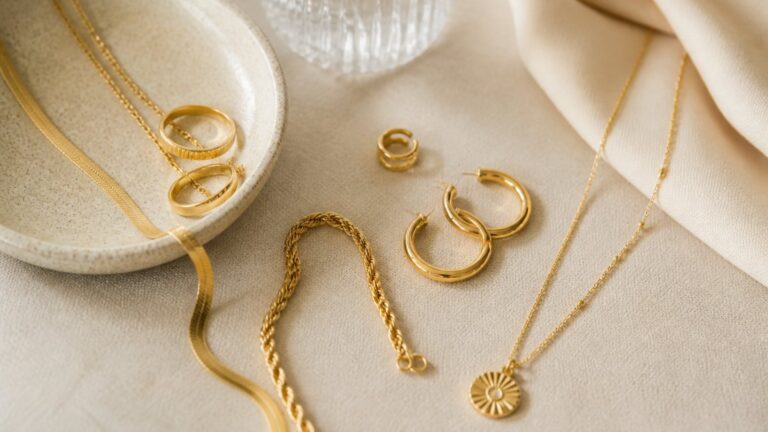
Look at what she already wears every day. Her existing jewelry is the best guide you have. Note the metal color she reaches for, whether she prefers delicate bands or bold statements, and whether she favors clean lines or intricate detail.
A common mistake is guessing at a style she admires but never wears. If you want a deeper framework for reading taste and values, our guide on how to choose meaningful jewelry gifts that last walks through it step by step.
A Four-Part Framework for Making the Ring Meaningful
Style is only one layer.
**1.
**2.
3. Anchor one memory or milestone. Pick a single detail that carries personal meaning and let it drive one design element, not five.
4. Set the trade-off budget. Personalization always costs something, money, durability, or maintenance. Engraving is inexpensive but wears away with resizing.
Watch out: couples often try to encode too many meanings into one ring, and the result reads as busy rather than personal.
Matching the Ring to Jewelry She Already Wears
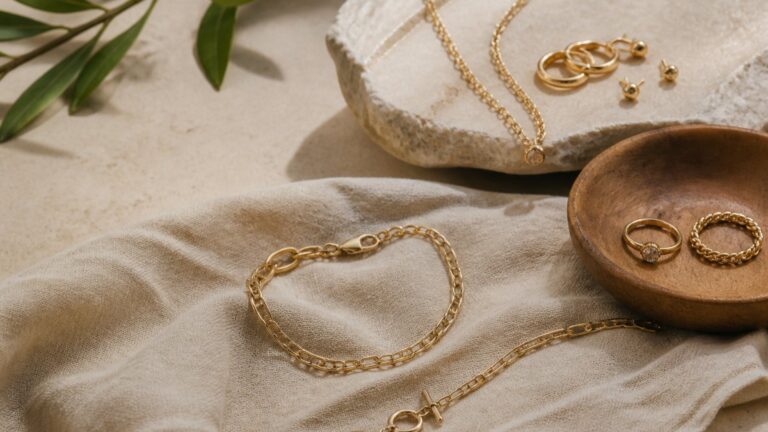
Before you settle on a metal, lay her current pieces side by side. Note the dominant metal, the scale of the bands, and the finish, polished, brushed, or matte.
If her collection already mixes metals, a two-tone or mixed-metal design can feel intentional rather than mismatched. If it does not, stay consistent. This is also the moment to check for metal allergies: nickel-sensitive wearers often do better with platinum, palladium white gold, or yellow gold than with standard white gold alloys.
Inclusive Ways to Approach the Decision
The surprise-proposal script is only one path. Many couples now shop together, split the decision, or choose rings for each other in stages. Some traditions call for multiple rings, an engagement ring plus a separate band, or rings exchanged in both directions.
There is no rule that one partner must choose alone. If a surprise matters, a common pattern is to propose with a placeholder or a shared shopping appointment, then choose the final ring together.
How to Choose Meaningful Engagement Jewelry for Couples
For couples, the process works best as a shared decision rather than a surprise. Talk about the ring before you shop, even in broad strokes.
We recommend a simple three-part framework: agree on the feeling the ring should give, agree on a budget ceiling, and agree on how involved each partner wants to be. That conversation turns a stressful purchase into a moment you build together.
How to Pick an Engagement Ring for Yourself
Buying your own ring is not a compromise, and there is no rule that says someone else must choose it. Start with how you want to feel when you look down at your hand, then work backward to the design.
The practical advice here is to try on more than you expect. A shape that looks striking in photos can feel uncomfortable on your finger, and a metal you love in theory may clash with your skin tone.
Engagement Ring Styles and Settings That Fit Real Life
The best setting is the one that survives your actual routine, not a hypothetical one. If you work with your hands, lift weights, or type all day, a high-profile setting will catch on everything. A lower, more protected setting wears better over time.
Settings and How They Change the Look
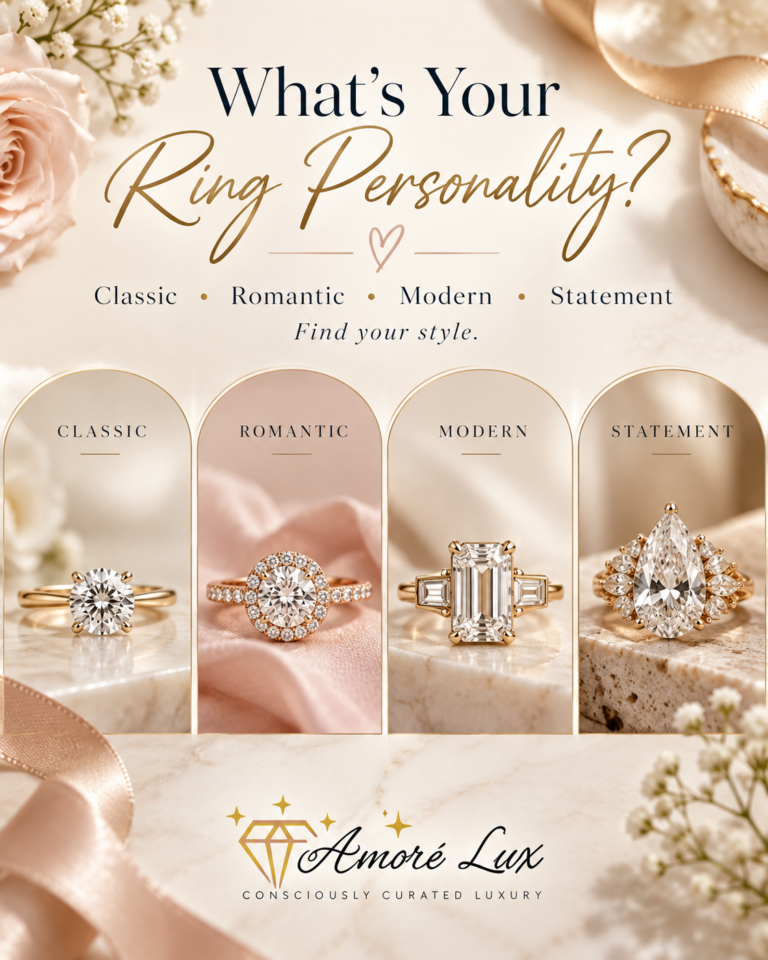
The setting type decides how large the center stone appears and how much light it catches. A bezel setting wraps the stone in metal for security and a modern look. Prong settings let in more light and read as classic.
If you are weighing a three-stone design, you can browse a real oval three-stone engagement ring to see how the setting sits on the hand before you decide.
The Engagement Ring 5 Cs and Choosing a Center Stone
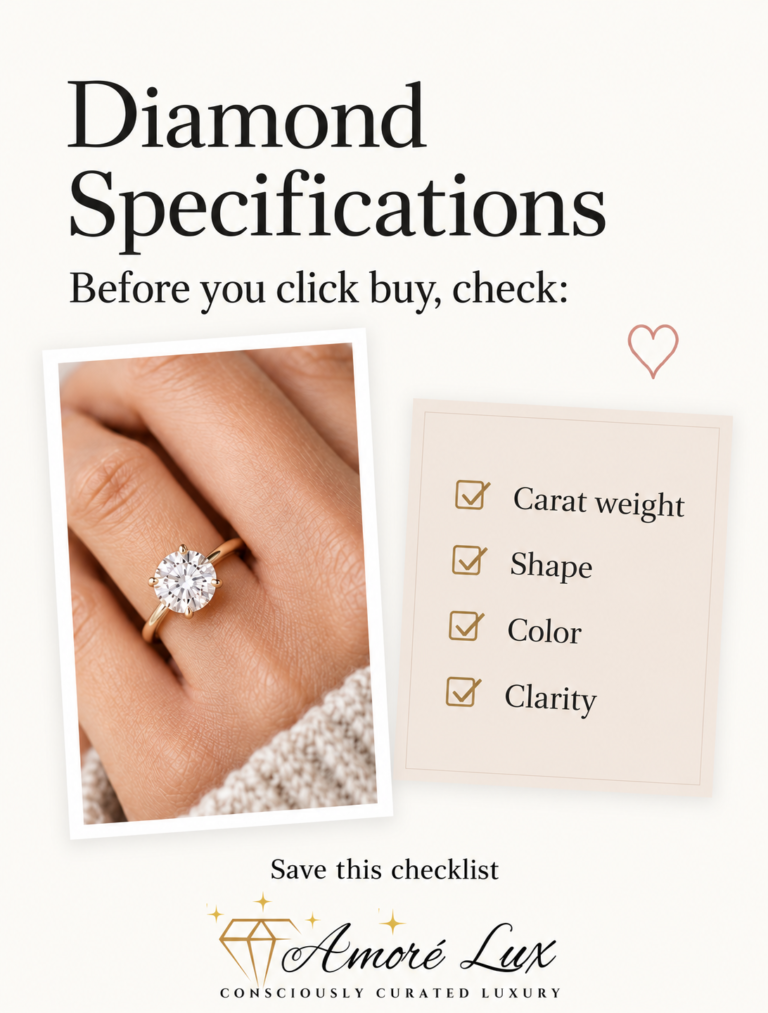
The engagement ring 5 Cs are cut, color, clarity, carat, and certification. Cut matters most because it controls how much the stone sparkles (GIA 4Cs Clarity). Color and clarity matter next, and carat is about size, not quality. Certification from an independent lab confirms what you are buying.
Prioritize cut over carat. A well-cut smaller stone will outshine a larger, poorly cut one every time.
Diamond Shapes and Gemstone Alternatives
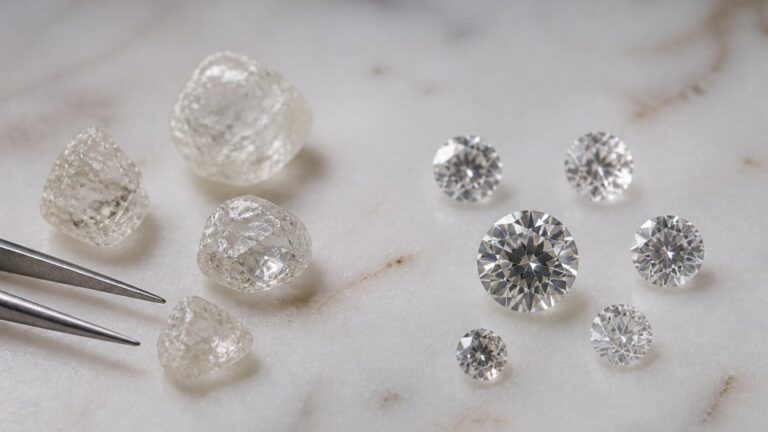
Round brilliant stones hide flaws best and offer the most fire. Emerald, Asscher, and cushion cuts trade some brilliance for a distinctive presence. If a traditional diamond is not the goal, colored gemstones such as sapphire, emerald, and ruby bring personality and often more color per dollar. Fancy-colored lab-grown diamonds are another route. For ideas, see our roundup of unique engagement rings with colored gemstones.
Choosing a Metal and Matching Jewelry They Already Wear
Match the metal to the jewelry she already owns. Yellow gold suits warm skin tones and vintage-inspired designs. White gold and platinum read cool and modern. Rose gold flatters most skin tones and feels softer.
Mixed metals are fine if her collection already blends them; otherwise, stay consistent so the ring sits comfortably beside her other pieces. If rose gold is in the running, you can view a rose gold pear three-stone ring to judge the tone against what she wears now.
Setting a Budget and Avoiding Common Mistakes
Set your budget before you walk into a store, and treat it as a ceiling, not a starting point. Decide what total you are comfortable spending, then allocate it across the stone, the setting, and any extras.
Watch out for three common mistakes: buying for the photo instead of the finger, skipping certification to save a little, and letting a salesperson set the pace. Slow down and compare options.
| Decision | What to Check | Why It Matters |
|---|---|---|
| Center stone | Cut grade and certification | Drives sparkle and value |
| Setting | Height and security | Affects daily comfort and wear |
| Metal | Match to existing jewelry | Keeps the ring in rotation |
| Budget | Set a ceiling first | Prevents pressure-driven overspending |
Sourcing, Wearability, and Long-Term Care
Ask where the stone and metal come from and whether the sourcing is documented. Lab-grown diamonds offer a traceable origin, and many buyers choose them for that transparency.
Long-term care means regular checks, gentle cleaning, and protection for the stone. When you are ready to compare, you can shop lab-grown diamond engagement rings and bands to see the full range.
Ethical Sourcing: What to Ask and What the Documents Show
Sourcing is a values decision, and it is easier to verify than most buyers expect. For mined diamonds, ask for a grading report from an independent lab that ties the documentation to the specific stone.
The practical rule: if a seller cannot explain where the stone and metal came from, treat that as a reason to slow down, not a reason to walk away immediately.
Wearability and Accessibility Needs
Appearance is only half of wearability. Occupation, sensory preferences, dexterity, and allergies decide whether a ring stays on the hand.
- Hands-on work or lifting: a high prong setting catches on gloves, straps, and gym equipment. A bezel or low-profile setting protects the stone and the wearer.
- Sensory sensitivity: spinning stones, exposed prongs, and sharp edges bother some wearers. A smooth, closed setting and a comfort-fit band reduce friction.
- Dexterity or swelling: a slightly wider comfort-fit band is easier to put on and remove, and it accommodates mild swelling through the day.
Watch out: a ring that photographs beautifully but sits too high for the wearer’s daily routine will spend most of its life in a drawer, which defeats the purpose of a meaningful piece.
The Ownership Plan: Insurance, Resizing, and Repair
Budget for the ring’s full life, not just its purchase price. A practical ownership plan can cover several things:
A meaningful ring is meant to be worn for decades. Treating sourcing, wearability, and ownership as part of the decision, not an afterthought, is what separates a piece that lasts from one that only looks good on the day you buy it.
Choosing meaningful engagement jewelry asks you to slow down and shop for a person, not a price tag. At Amoré Lux, we craft pieces designed to reflect inner strength and grace, with lab-grown diamonds and intentional design that holds up to everyday wear. Our collections celebrate love, light, and individual expression, so the ring means something the moment it slides on.
Frequently Asked Questions
What are the 5 Cs of engagement rings?
The 5 Cs are cut, color, clarity, carat, and certification. Cut affects sparkle most, color and clarity describe how clean and white the stone looks, carat is weight, and certification is an independent report confirming the other four. When choosing meaningful engagement jewelry, treat certification as your proof point: it tells you what you are buying before the ring is set. Ask to see the report and confirm it matches the stone in the setting.
How can I choose an engagement ring that feels personal and meaningful?
Start with the wearer’s daily life rather than a trend. Note the jewelry they already wear, the metals they prefer, and whether they work with their hands. Then choose a meaningful engagement jewelry design around one or two personal details, such as a birthstone, an heirloom stone reset, or a shape that matches a piece they love. Keep the setting practical so the meaning survives years of everyday wear, not just the proposal.
Should couples choose an engagement ring together?
Many couples do, and it removes most of the guesswork. Shopping together lets you confirm ring size, metal preference, budget, and setting style before anything is made. If you want to keep the proposal a surprise, choose the stone and setting together but keep the timing and final presentation private. Either way, an open conversation about budget and style avoids returns, resizing, and disappointment later.
How much should I spend on an engagement ring?
There is no rule that fits everyone, and the old three-month salary guideline is not a standard you need to follow. Set a number you can pay without borrowing, then prioritize cut and durability over size. Pricing for fine jewelry depends on the stone, metal, and setting, so check Amoré Lux’s website for current prices rather than working from averages. A smaller, well-cut stone in a secure setting often looks better than a larger one with a poor cut.
How do I pick an engagement ring for myself?
Try rings on before deciding. Pay attention to band width, how high the stone sits, and whether the setting catches on clothing, since these decide how often you actually wear it. Choose a metal that suits your skin tone and any jewelry you already own, and confirm your ring size at the end of the day when fingers are largest. If you plan to wear it daily, favor a low-profile setting and a durable metal.
What should I know about ethical sourcing before buying?
Ask where the stone and metal come from and request documentation. Lab-grown diamonds and colored gemstones should come with a grading or origin report, and recycled or responsibly sourced gold and platinum should be stated clearly. Ethical sourcing is not a marketing extra; it is a paper trail. If a seller cannot explain the origin of a stone in plain terms, keep looking.