How to Choose Meaningful Jewelry Gifts That Last
Last Updated: November 4, 2026
Quick Summary
To choose meaningful jewelry gifts, build a style profile of what the recipient already wears, then match the piece to the occasion and its symbolism. Verify the metal, stone, and setting, and confirm ethical sourcing so the gift lasts for decades.
- Note metal tone, scale, finish, wear pattern, and sensitivity before browsing any product page.
- A single precise personal detail beats five decorative ones on personalized pieces.
- Karat measures gold content: 18k is 75% gold and 14k is roughly 58%.
- Low-profile bezels and six-prong settings suit active daily wearers best.
- Remove rings before swimming, harsh cleaning chemicals, or lifting weights.
Table of Contents
- Why Meaningful Jewelry Beats Every Other Gift
- Start With the Recipient’s Style Profile and Jewelry Aesthetic
- Match the Occasion, Milestone, and Symbolism
- Personalized Jewelry Gift Ideas That Carry Emotional Resonance
- Tips for Buying Fine Jewelry: Metals, Gemstones, and Craftsmanship
- How to Pick a Diamond Proposal Ring She’ll Actually Wear
- Ethical Sourcing and Jewelry Care for Pieces That Last
- Finding Your Piece in the Amoré Lux Collection
- Frequently Asked Questions
Why Meaningful Jewelry Beats Every Other Gift
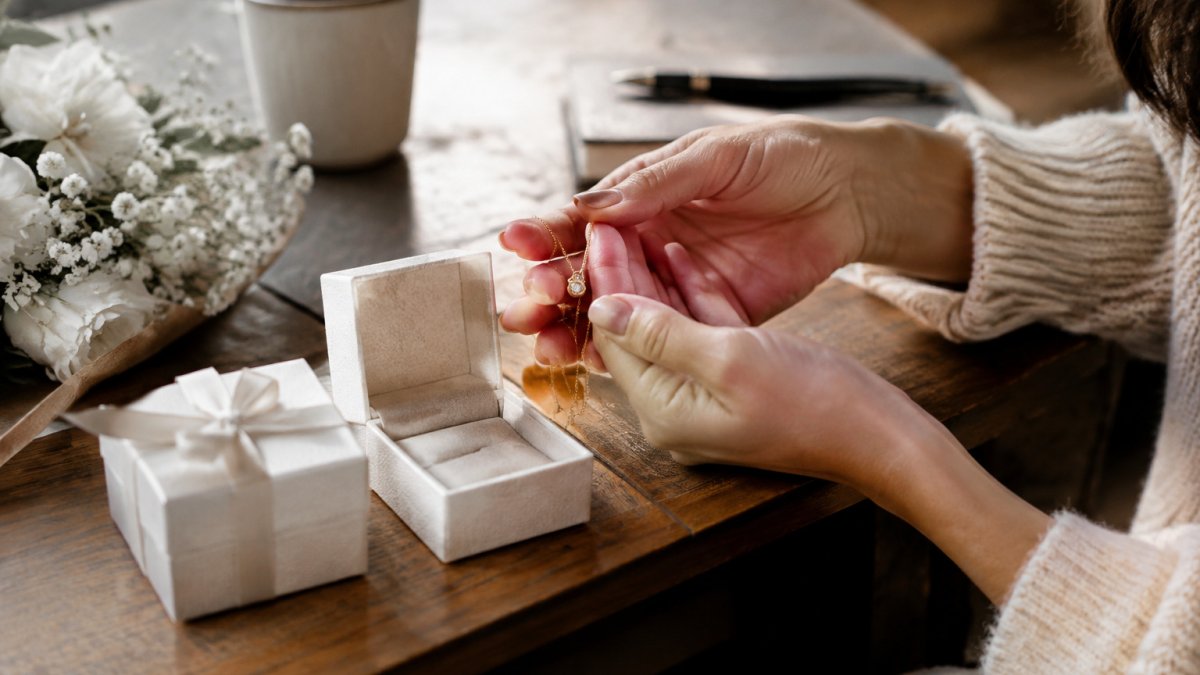
Meaningful jewelry is a gift that carries memory, identity, and intention, which is why it outlasts flowers, gadgets, and gift cards. A piece chosen with the wearer in mind is the kind that gets worn for decades.
Here’s the tension most gift guides ignore: the jewelry market is crowded, but genuinely thoughtful selection is rare. Anyone can pick a pretty pendant. Choosing a piece that fits a person’s style, marks a real milestone, and holds up to daily wear takes a method.
Below, we’ll show you exactly how to move from “I think she’d like this” to “this was made for her,” covering style profiling, symbolism, metals, gemstones, and ethical sourcing. The approach works whether you’re buying a first promise ring or a twentieth-anniversary keepsake.
Start With the Recipient’s Style Profile and Jewelry Aesthetic
A style profile is a simple record of what a person already wears, how often, and in what settings. Build it before you browse a single product page.
Start by observing, not asking. Look at what she reaches for on ordinary Tuesdays, not just special occasions. Then note five things:
- Metal tone: Does her existing jewelry lean yellow gold, white gold, silver, or platinum? Check the clasp and the inside of the band, where the original color is often preserved.
- Scale: Delicate chains and small studs, or bold statement pieces? Note the width of her most-worn band and the diameter of her usual studs.
- Finish: Polished and bright, or matte and textured? A brushed finish reads differently on the hand than a high polish.
- Wear pattern: Does she wear the same pieces daily, or rotate by outfit? Daily-wear pieces need low-profile settings and secure clasps.
- Sensitivity: Does she mention metal allergies or irritation?
A common mistake is buying the piece you find striking rather than the one that matches her jewelry aesthetic.
Ask better questions. Direct questions like “What’s your favorite jewelry?” often produce polite answers.
Read her saved inspiration. If she keeps a Pinterest board, a saved folder, or screenshots, look for patterns rather than individual pieces.
For readers profiling a recipient who treats jewelry as self-expression, our look at modern jewelry design for individual expression explores how contemporary designers translate personality into form.
Match the Occasion, Milestone, and Symbolism
Every milestone has its own symbolic vocabulary, and matching the piece to the moment is what separates a keepsake from a nice accessory. A promotion calls for something different than a first anniversary.
Why symbolism lands. A gift feels meaningful when it communicates that the giver noticed something specific about the recipient or the relationship.
Here’s how the symbolism tends to map:
| Occasion | Symbolic Focus | Strong Piece Choices |
|---|---|---|
| New relationship | Promise, intention | Promise ring, small pendant |
| Engagement | Commitment, forever | Diamond proposal ring |
| Anniversary | Endurance, shared history | Eternity band, engraved bangle |
| Birth of a child | New life, protection | Birthstone pendant, locket |
| Personal milestone | Self-worth, independence | Signet ring, solitaire studs |
Relationship context changes the rules. The same occasion calls for different levels of intimacy depending on who receives the gift.
Birthstones and engravings. Birthstones deserve special attention because they add a layer of personal meaning at no cost to design.
Watch out: choosing a symbol that matters to you but not to the recipient is the most common way a meaningful gift misses.
If you’re planning toward a wedding, our complete guide to matching wedding bands for him and her walks through coordinating metals, widths, and finishes so both partners end up with something they’ll actually wear.
Personalized Jewelry Gift Ideas That Carry Emotional Resonance
Personalized jewelry gift ideas work best when the customization is subtle enough to wear every day and specific enough to be unmistakable to the recipient. The engraving should mean something to two people, not to a crowd.
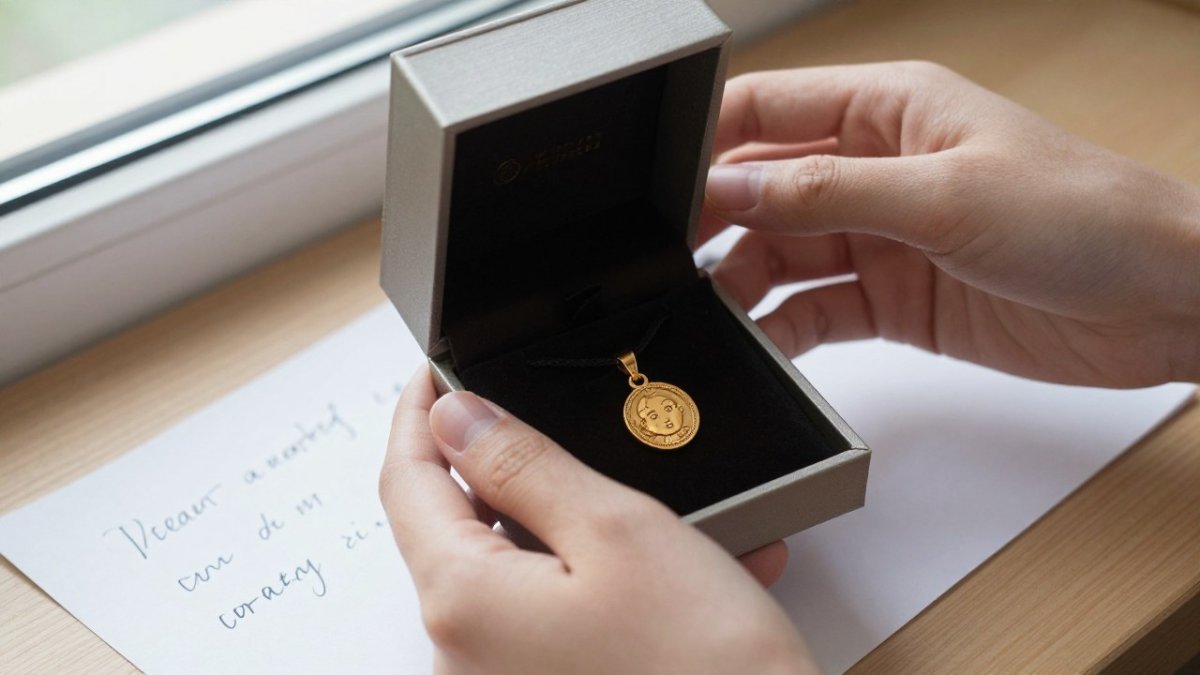
Five approaches that consistently land:
- Engraved inner band: A date or initials on the inside of a ring stays private and intimate.
- Birthstone stacking rings: One stone per family member, worn together.
- Coordinate pendant: The latitude and longitude of a first home or proposal spot.
- Locket with a photo: Traditional, and still the most emotionally direct option.
- Handwritten signature necklace: A loved one’s actual handwriting cast in metal.
What most guides miss is restraint. Over-personalized pieces, with names in three fonts and multiple charms, tend to get worn once. One meaningful detail beats five decorative ones.
Tips for Buying Fine Jewelry: Metals, Gemstones, and Craftsmanship
Tips for buying fine jewelry come down to three checks: the metal, the stone, and the setting. Get those right and the piece will hold up for years.
Metals. Precious metals are graded by purity, and in the United States that purity is stamped as a hallmark.
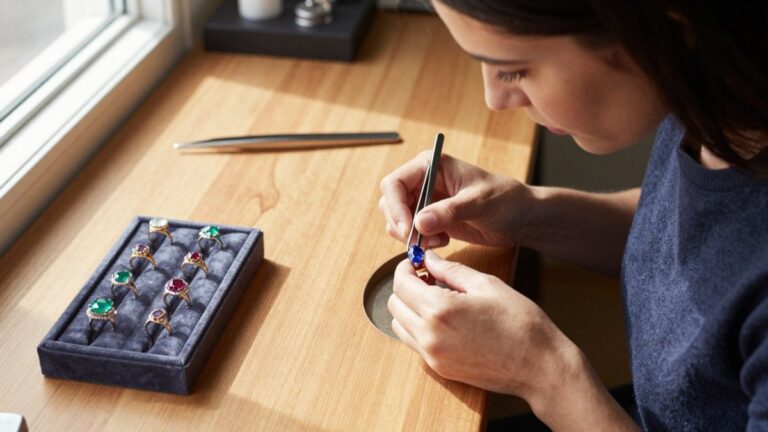
Gemstones. Beyond diamond, consider sapphire, ruby, and emerald for hardness and color. Ask about gemstone properties relevant to wear, since hardness affects scratch resistance and treatment status affects care needs.
Craftsmanship. Check the setting style. Prongs hold stones securely but can snag; bezels protect the stone but hide more of it.
Before you commit to a significant purchase, it’s worth understanding what happens after the sale. Our guide to jewelry repair and warranty policies explains what coverage typically includes and what to ask before you buy.
How to Pick a Diamond Proposal Ring She’ll Actually Wear
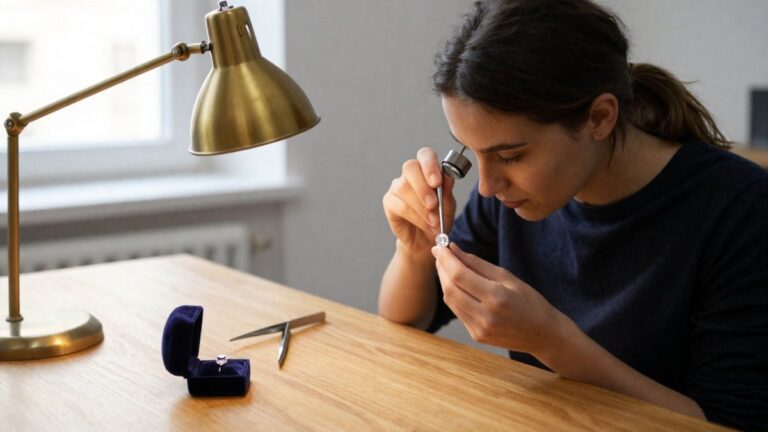
To pick a diamond proposal ring she’ll actually wear, match the ring to her daily life first and the proposal moment second. A ring that catches on sweaters or sits too high on the finger gets left in the box.
Work through it in this order:
- Confirm the metal. Match her existing pieces, not the trend of the moment.
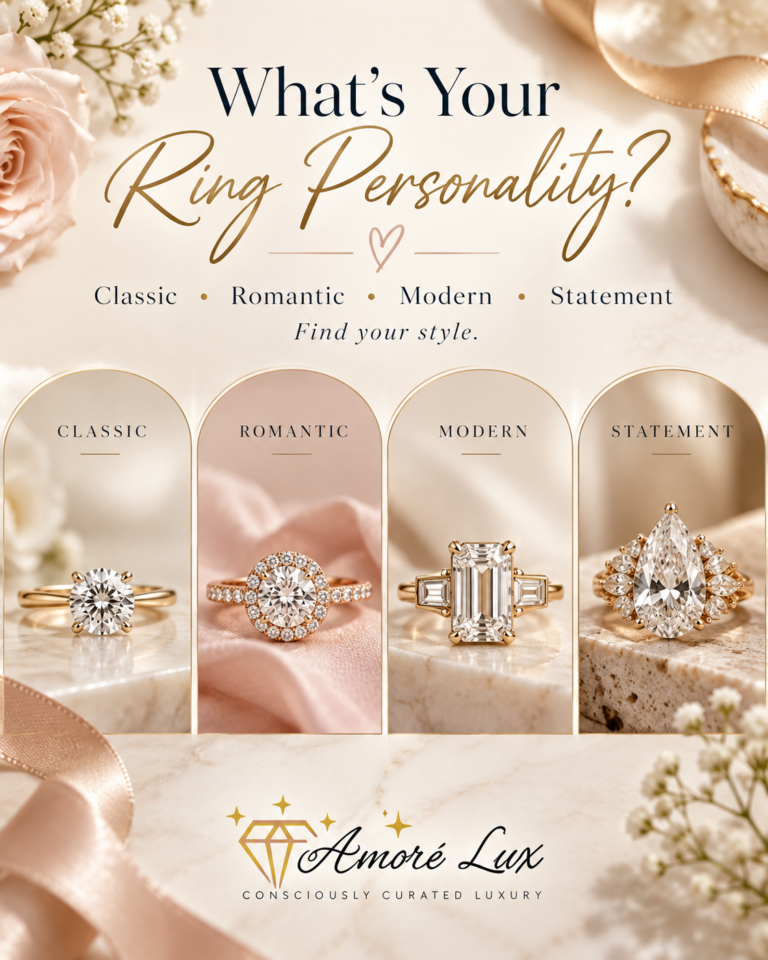
- Choose the stone shape. Look at what she’s saved, pinned, or admired. Shape is more personal than size.
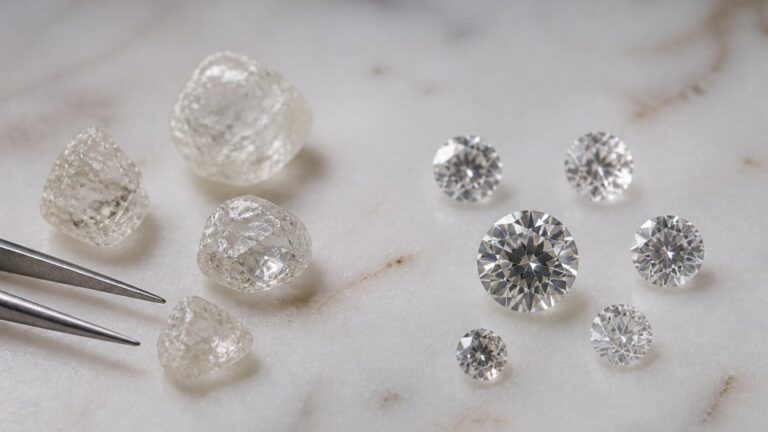
- Decide on lab-grown or mined. If everyday durability is your concern, the setting deserves as much attention as the stone.
- Pick a wearable setting. Low-profile bezels and six-prong settings suit active wearers. Very high settings suit people who dress up more than they type.
- Size it correctly. Get her ring size from an existing ring, and confirm the seller’s resizing policy before you buy.
- Plan the presentation. The box, the words, and the timing matter as much as the ring.
When you’re ready to compare shapes and settings side by side, you can shop lab-grown diamond engagement rings and see how each style reads on the hand.
Watch out: buying a ring in a style she’s never worn because it looked striking in a photo is the most common proposal-ring regret. Comfort and proportion beat drama for something worn every day.
Ethical Sourcing and Jewelry Care for Pieces That Last
Ethical sourcing and ongoing care are what turn a piece of jewelry into an investment piece rather than a purchase you replace in three years. Both deserve a place in your buying decision.
On sourcing, ask direct questions. Where were the stones grown or mined? Does the jeweler provide documentation for the stones and the metal? When shopping for any diamond, it is reasonable to ask about origin and whether the seller follows recognized responsible-sourcing standards.
On care, the routine is simple and most people skip it:
- Remove rings before swimming, cleaning with harsh chemicals, or lifting weights.
- Store pieces separately so harder stones don’t scratch softer metals.
- Clean with warm water, mild soap, and a soft brush, then dry fully.
- Have prongs and clasps checked by a jeweler periodically, especially on daily-wear rings.
Sentimental pieces deserve this routine most. If ethical sourcing is a priority for you, our roundup of ethically sourced diamond jewelry you can buy online covers what to look for and which questions to ask.
Finding Your Piece in the Amoré Lux Collection
Choosing well comes down to four moves: profile the wearer’s style, match the piece to the milestone, verify the metal and stone, and confirm the sourcing. Do those and the gift stops being a guess.
That’s the standard we build to at Amoré Lux. Founded by Abbey and Maria, our collection is designed to celebrate love, light, and individual expression. Every design starts with intention: jewelry that reflects inner strength and elevates everyday style.
If you’re ready to choose a piece that carries real significance, explore the collection and find the one that fits the person you have in mind.
Get started with Amoré Lux and give a piece she’ll wear, keep, and pass on.
Frequently Asked Questions
How do I choose meaningful jewelry for someone who has everything?
Skip the bigger-and-shinier approach and focus on personalization instead. An engraving with a date, coordinate, or private phrase turns a simple pendant into a keepsake no store-bought piece can match. Pay attention to what they already wear daily, then choose a meaningful jewelry piece in the same metal and scale. A locket, a small birthstone ring, or a bespoke design tied to a shared memory often lands better than another luxury item they did not ask for.
What should I consider when buying fine jewelry as a gift?
Start with the recipient’s style profile: minimal or bold, yellow gold or white metal, everyday wear or special occasion. Check the hallmark and karat for quality, confirm the gemstone’s origin if ethical sourcing matters to them, and think about durability for daily wear. These tips for buying fine jewelry apply whether you are shopping for a milestone or a just-because gift. When in doubt, choose a timeless design over a trend piece, and keep the receipt policy in mind.
What makes a piece of jewelry truly meaningful as a gift?
Meaning comes from connection, not price. A piece tied to a milestone, a birthstone matching a child’s birthday, or an engraving with a private phrase carries sentimental value that grows over time. The psychology of gift-giving matters here: recipients remember how a gift made them feel understood. Choose something that reflects their identity and values, and it becomes an heirloom rather than an accessory.
How can I personalize a jewelry gift to make it more sentimental?
Engraving is the simplest route: initials, a wedding date, or coordinates of a meaningful place. Beyond that, consider birthstones, symbolic motifs like a locket for a parent, or a bespoke design built around a family stone. Personalized jewelry gift ideas work best when the detail is private enough that the recipient knows it was chosen for them specifically.
How do I determine the recipient’s jewelry style and preferences?
Look at what they wear now. Note the metal color, whether they favor delicate chains or statement pieces, and which rings or earrings never leave their body. Ask a close friend or family member if you can do it discreetly. Photos on social media often reveal a jewelry aesthetic too. If you are still unsure, a minimalist pendant in a precious metal they already wear is the safest choice, and it layers well with existing pieces.
What are the 5 C’s of jewelry and why do they matter for gifts?
The 5 C’s, cut, color, clarity, carat, and certification, describe diamond quality and help you compare pieces on more than size. Cut drives sparkle, color and clarity affect appearance, carat is weight, and certification from a recognized lab confirms what you are buying. For a gift, prioritize cut over carat: a well-cut stone in a smaller size often looks better than a larger, poorly cut one. Certification also protects your purchase if the piece is ever resized or appraised.
The hardest part of meaningful jewelry isn’t finding something beautiful; it’s finding something that belongs to one specific person. Start with her style, anchor it to the milestone, and verify the craftsmanship before you fall for the design. When you’re ready to make the choice, Amoré Lux is here to help you find a piece built to be lived in, with thoughtfully crafted designs, a focus on everyday wearability, and jewelry made to radiate love, light, and confidence.